- Homepage
- Eco-friendly homes
- Our Green Home
Our green home
Our green home covers subjects as diverse as harvesting rainwater and sunshine to making compost heaps; and growing many different starches and legumes for vegetable protein.
Starting on the green journey will be daunting but it's made one step at a time, beginning at where you are.
That could be a need for more vegetable protein from your food because you have had a scare in the family; you want to cut back on commercial red meat. Free-range methinks is quite different if you can get it; only chicken and perhaps rabbit are options for the those living in villages and towns.
It might also include a few beehives if you are prediabetic as I was and are determined to follow the Heart Association guidelines; no more than 6 teaspoons per day. Minimally-processed raw honey makes that eminently possible; it has a low GI and it's less ecocide-polluted than that from agricultural areas.
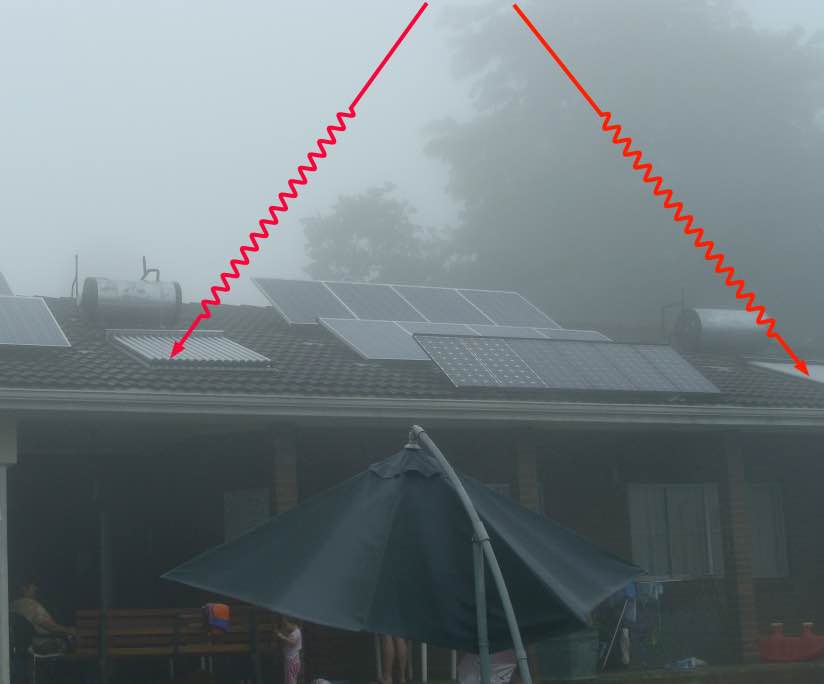 Solar panels and thermosyphen geyser on a misty day
Then you would want to start with growing green beans and peas; and learning how to make hummus.
Or perhaps you are getting repeated infections and want to know how to increase the antioxidant vitamins for your well-being; and making a natural probiotic in your own kitchen.
Could you create a little blue zone in your own home and garden where longevity, many busy years without the chronic diseases that today bedevil our lives, becomes central to your planning?
Not only the length but the quality of our remaining days on Mother Earth is obviously important. Vibrant, busy and strong with all one's marbles intact to the last breath is our motto.
"To stand with those who see the world differently from the majority is not easy. It requires a degree of courage and a willingness to follow our own individual path."
- Dr Tess Lawrie, MD
I am not a vegetarian myself but it lies in our family history, so growing lettuce and rocket was where we personally began; and herbs like parsley. My great-grandmother gave up meat after witnessing the slaughter of horses for food during the siege of Ladysmith.
Recycling the waste from our homes is something that all those who have a love and respect for the planet should be doing. Is it your heart's desire to leave a habitable, pristine place in the sun for your offspring?
In short start where you are, rather than the first blog you read.
Our green home
Our green home covers the blogs published in the media over the last five years. We will set it up in categories. Taking good care of ourselves and our possessions is the theme tune.
End of winter chores like cleaning out gutters and turning compost heaps need to be done mindfully. It is easy to injure yourself if the ladder slips or you put the garden fork through your boot.
Our green garden
The organic fruit and vegetables from our green garden are at the heart of our wellbeing. Food free from toxic pesticides and grown in compost and vermi-leachate from the worm farms is absolutely central. It is our desire to protect our lives from malignant neoplasms and the chronic diseases; that means a fresh look at lifestyle.
Freshly-picked the flavours are divine; you will never know just how much better until you begin to indulge yourself in food grown on your own land. There are so many health benefits too.
Eat greens for your eyes' sake whether you like them or not; needless adult-onset blindness is not a pleasant thought. Over ten million Americans are affected; and all those enjoying the commercial diet found in traditional supermarkets are vulnerable.
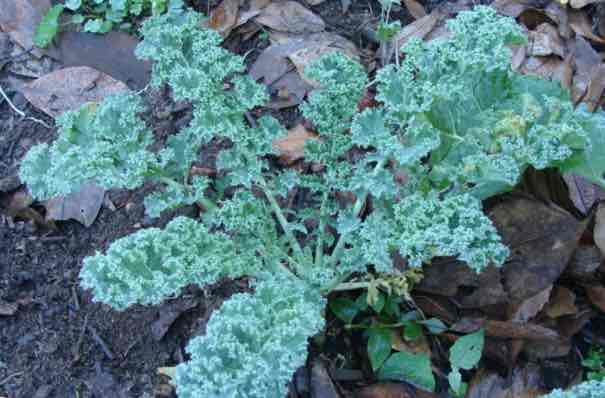 Kale is the best source of lutein by a long mile
When making recipes with lemon juice, as with many green salads, ignore the prevailing advice. Use the pulp too; that is where more than half of the nutrients are to be found.
There are literally thousands of important phytonutrients in our organic food; like beta-cryptoxanthin, the most powerful antioxidant known to protect our brains against the neurodegenerative diseases. Not just an apple a day but a citrus too; use the pulp. You are unlikely to find these carotenoids and many other gems in the ultra-processed concentrate; it tastes awful in any case.
Legumes
Legumes are the foods that enable vegans to get
sufficient protein without eating meat, fish or chicken; or dairy products
and eggs. To balance the essential amino acids they need nuts and seeds too; we can learn from them.
At our green home we specialise in many different
legumes but queen of the table is the broad bean; they are also known
as favas. They protect us from the ravages of Parkinson's disease, the fastest growing neurodegenerative disease in the world today.
We are not vegetarians but are trying hard to reduce our reliance on meat for protein, partly because of the way animals are reared today; but also the contribution they make to greenhouse gases and a shortage of water.
Rainwater storage is our other contribution to this growing nightmare in South Africa. First Cape Town and now Port Elizabeth have been in dire straits.
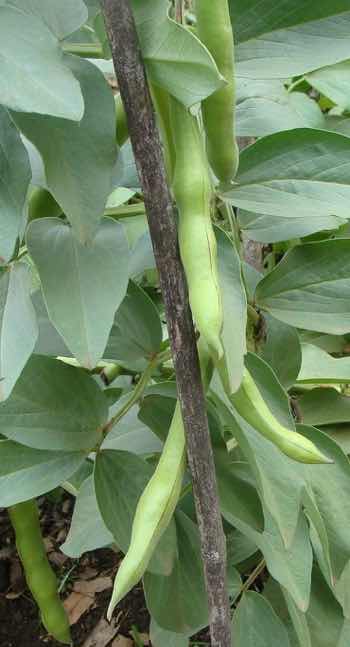 Broad beans are the only source of the "happy hormone".
Broad beans are the first on our list, firstly because they are the only legume that are a complete protein with all the amino acids; and secondly since they are only edible if harvested and enjoyed freshly-picked.
Since they are difficult to buy, we make a call for some gardeners to become broad bean entrepreneurs
who will be able to supply those suffering from Parkinson's disease;
these legumes are the only common source of pharmacological amounts of the precursor of dopamine, the "happy hormone."
Broad beans on toast will provide a marvelous dish that can be prepared in a very short time; certainly don't pop them out of their skins.
"There is little to no benefit in taking vitamin or mineral supplements to prevent CVD, cancer or death."
- US Preventative Task Services Force
I am yet to meet someone who does not love freshly-picked green peas or climbing beans from the garden. They have pride of place, not least because they supply nitrogen to the soil, obviating the need for inorganic fertilisers.
Compost heaps are important at our green
home; they help provide the humus that makes for increased uptake of
water from the soil. Building and turning them is hard physical work but they remain central in our attempt to turn our garden into a Cyan Zone;
where ten times as many people live to one hundred years old, whilst simultaneously caring for the planet.
In short if one wants to live long in the land, a garden has to be central; apart from anything else, taking time to smell the roses means less stress. It's being called forest bathing.
Growing and eating food from one's own garden, especially more legumes like beans and peas is common to all five of the Blue Zones where ten times as many folk live regularly into vibrant old age.
What is a cyan zone you may be asking. The colour is a mixture of blue and green; some would call it turquoise.
"There is increasing evidence that exposure to plants and green space and particularly to gardening, is beneficial to mental and physical health."
- Clinical Medicine (PMC6334070)[2]
Starches that don't make you fat
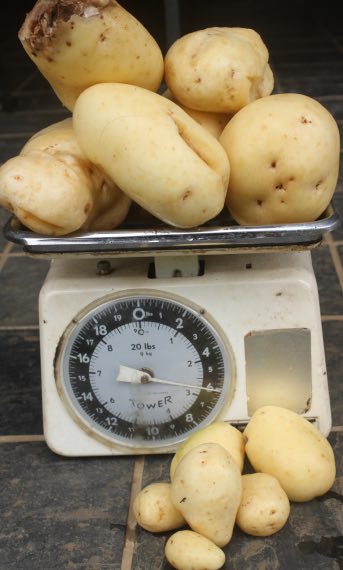
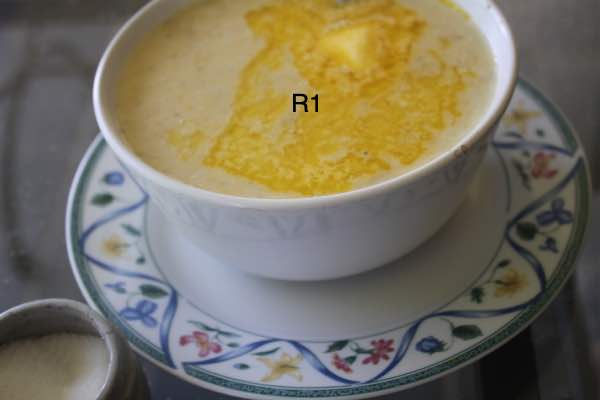
Starches get bad press and for a good reason; those that are unprocessed are very difficult to come by. You will find corn on the cob in season, new potatoes if you are lucky and brown rice but for the rest most of the carbs are highly glycemic; it comes as no surprise that the scientists are warning us that nearly 50% of those enjoying typical grocery store food are prediabetic.
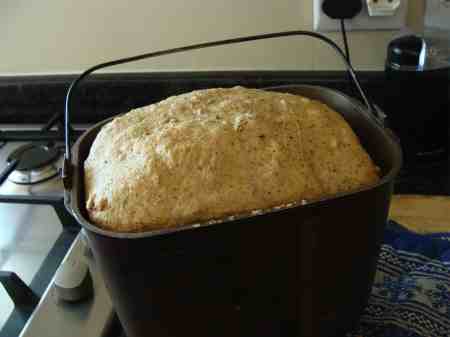
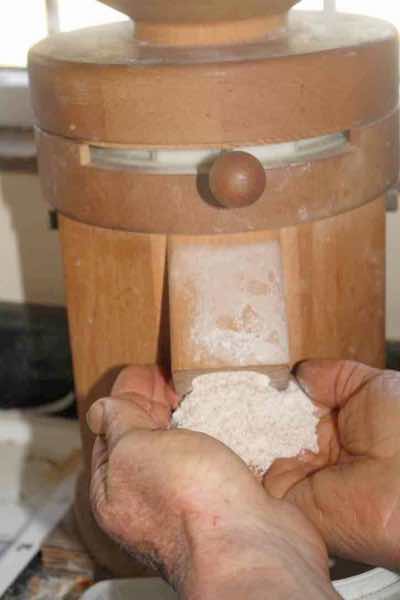
At our green home we grow and enjoy a mountain of starchy foods, mill our grains and do not have a weight problem. It's those ultraprocessed foods that make us sick. Nearing 80 years of age we enjoy lives without medication; you could too.
"It has been estimated that 20% of Medicare beneficiaries have five or more chronic conditions; and fifty percent are taking 5 plus drugs."

Our green kitchen
What goes on in your own kitchen at home will have a far greater impact on your wellness and longevity than how good or bad your doctor is; and the pain and disability you may suffer from. Hippocrates the Father of Western healthcare was the first one to acknowledge this; let your food be your medicine, said he.
In our green kitchen we often boast about our compost bin; it too will give a measure of your well-being.
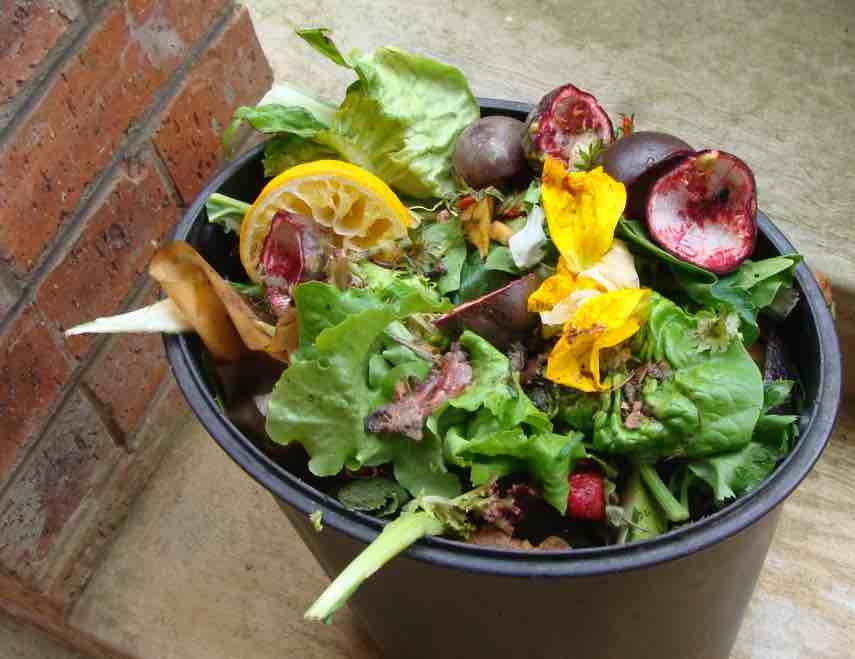
Brewing various beers and meads is a favourite occupation; do you know how to make merrylegs perry cider? It's not difficult if you have a glut of pears.
Another thing we boast about is our care for the microbiome; all the friendly bugs in and on our bodies.
Spices and all things nice
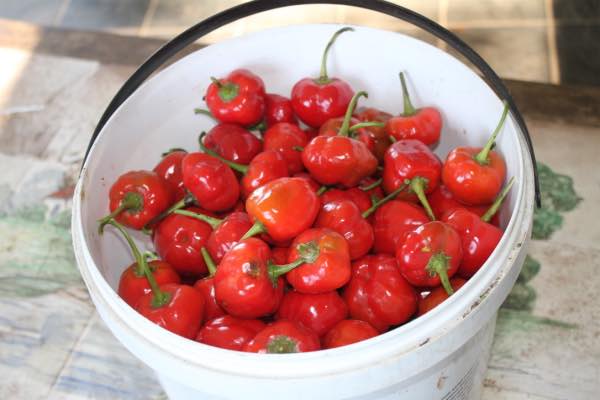
Peppadews are one of the most interesting and profoundly tasty foods I have grown. They are simply a delight. It's not difficult.
I do not have the energy for it but you could make a few bob on the side out of a little peppadew cottage industry in your garden. They take up about a square metre per plant and produce in excess of 100 delicious, spicy fruits that are not too hot.
Our Green Garden
Our Green Garden is a huge theme at our home; grow as much of your own food as you possibly can. Knowing there are no ecocides and sufficient of all those essential minerals means you aren't dependent on supplements.
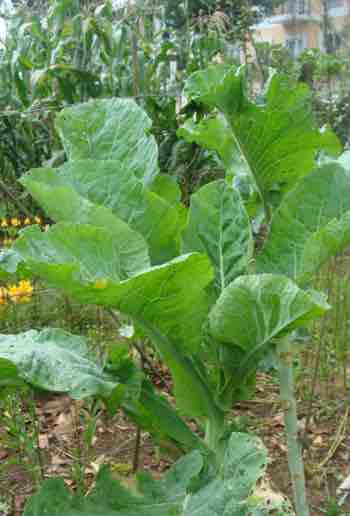
This page is constantly being updated. It's all about the protection afforded by plants like kale and lettuce in a delicious summer salad; with copious amounts of olive oil and various condiments made using the pulp and the juice of lemons.
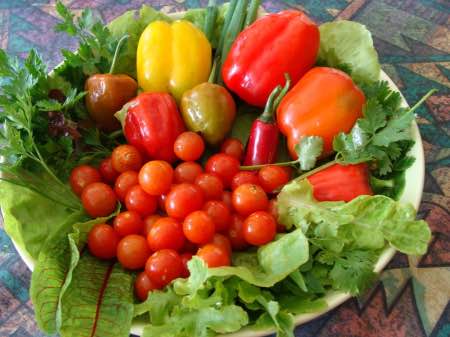 All from our green garden
These are the kinds of foods that protect us from the chronic degenerative diseases.
Care of our teeth is also important; astonishingly flossing gives nearly 50% protection against a thrombo-embolic stroke.
Easy composting
Our vegetables and fruit trees desperately need dozens of minerals and other nutrients from the soil, not just the NPK that commercial farmers replace with inorganic fertiliser. Over 50% of those enjoying typical grocery store food are deficient in magnesium, for example. It's essential in more than 300 different biochemical reactions going on continuously in the body.
It's not difficult; easy composting is a major theme at our eco-friendly home.
Replacing as many of these minerals and compounds as possible is the goal of every serious gardener; that means compost heaps that are the source of these organic substances.
Starting a compost heap is hard work though; you can dump your gym contract but you still daily have to do your lower back, shoulder and other exercises before venturing into your green garden.
Easy composting can become very difficult if you don't warm up your body first, just as you would before any sports match.
Backyard permaculture
Backyard permaculture is all about turning your garden into carbon sink that will absorbe CO2 from the atmosphere and provide you with a rich source of nutritious, tasty food. The cost primarily is the sweat dripping from your brow and the precious hours you invest in the health of both yourself and the planet.
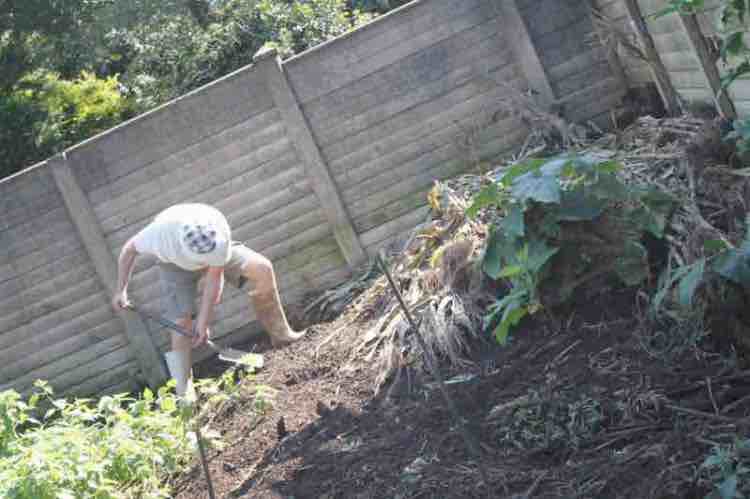 The vitamin D from sunshine is a great bonus but wear a hat
worm farms
Worm farms and the black plague are not so far-fetched. Madagascar had a serious outbreak in 2018. Whenever garbage is not effectively collected and properly treated then the rats that harbour the bubonic bacterium will have a field day.
These confessions of a waste picker all started because of a need to feed the worms, only to discover there are totally other and new dimensions to dumpster diving. People too will eat what the greengrocer throws away.
What is a worm farm will blow your mind away; these wrigglies double in number every month and need a mountain of kitchen and garden waste. It's a compost heap on steroids.
Our green solar power
Our green solar power, harnessing energy from Mr Golden Sun as our grandchildren call him is a very large topic at this site. In countries with an unreliable grid that means batteries for storing the energy. Make your home resilient to the inevitable change that is coming upon our world.
It is time to go solar.
What is a professional is an important question to answer before setting out on a solar installation.
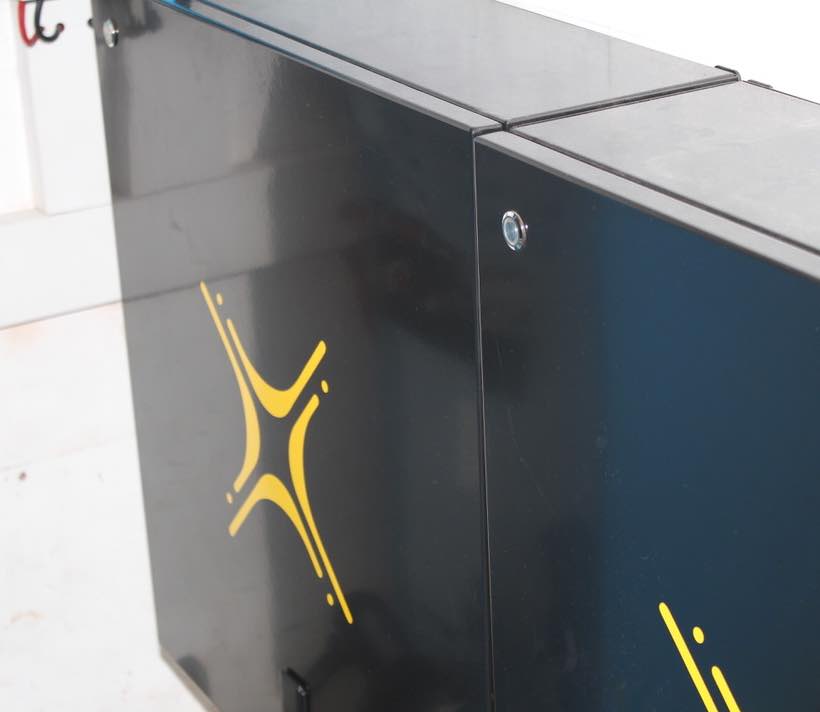
Lithium batteries are still the best way to store electrical energy in the home. There are many other new types coming onto the market but they at this stage are still more expensive and less proven.
These are astonishingly good; we are waiting for several consecutive wet days to see how they cope before going off the grid. Here is an update; we have used only 43 kWh from the utility in the last four years.
Should you put in a gas geyser or go onto a prepaid electrity meter is a question that has haunted us; we have finally made the decision.
The big hit in electricity prices should come into the equation when considering the financial viability of going solar.
The total unreliability of the utility in our village gave rise to drama on Town Hill.
There is a solution to load shedding and security sytems; it is as simple as replacing the small inadequate gel-cell batteries.
Electric vehicles
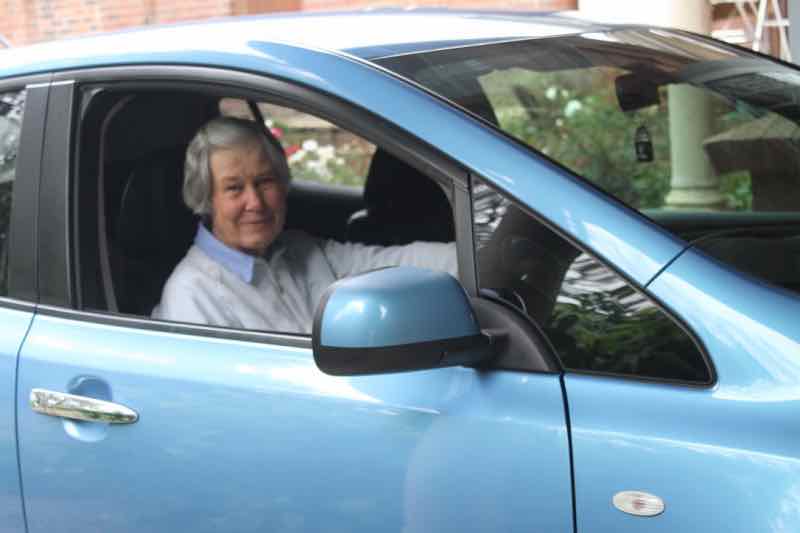
Electric vehicles are the future but they remain very expensive and not many are available in South Africa. In December 2019 we gave ourselves a much desired Christmas gift; a second-hand Nissan Leaf. Seven years later it still has pride of place of all the cars I have ever earned though the battery is lagging; the range is only 100km now.
Turning over a blue Leaf took on a different meaning that New Year.
But first an update on the general status of electrical vehicles in South Africa. The E-car has landed gives my take on the subject.
Servicing of E-cars comes into the equation when considering entering this brave new world. The costs are minimal except when you need a new battery.
Here's a little update; in 2026 we bought a medium-sized Chinese EV. So far it is looking very good with a range of over 300km; a saving of R3000 per month in fuel. It's charged from our solar panels.
There are no hints in this Warren Buffett interview what car he drives but this man is an inspiration to me; he is a world leader in the art of frugal living.
Harvesting the rain
Harvesting rainwater remains near the top of the list of priorities at our green home.
Whilst it is true that the rain in industrial areas will absorbe some pollutants from the atmosphere, nothing compares with the nano-particles of plastic that are found in our municipal and most bottled waters; over 300 tiny bits per litre on average.
How safe is our drinking water is a very disturbing question to face.
Post-chlorination products too are highly carcinogenic; it was our desire to have a copious supply of free pristine rainwater straight from the tap in our home. There is plenty for the garden also.
Green rainwater harvesting is a building project that can be completed in about two weeks for an estimated cost of R50,000 in 2024.
At rain-water storage you can weigh more thoughts on the subject. We have been harvesting the manna from the skies for nearly fifteen years; I would still do it no other way. A life without vicissitudes of the utility companies is a joy.
Plastic in our drinking water
It is hard to believe but the average American consumes 5g of plastic, mostly from the water he drinks every week; that is the weight of a credit card. Particularly disturbing is how much of it comes from tea-bags[2].
How much plastic is in the human brain is a disturbing question.
Harvesting rainwater is not rocket science; we have found that storing it in an underground reservoir is the best way.
Cleaning the gutters at the end of autumn is a chore that isn't pleasant but should be done regardless of whether one is harvesting rainwater or not.
Hot water is best obtained via a solar geyser.
The material expressed on this page is gleaned from the nutritional and environmental literature; it is clearly referenced. A plain distinction is made between the author's opinion and that which is scientifically proven. When in doubt consult your health professional.
To suggest a correction or clarification, write to Dr Bernard Preston here. Contact.
Newsletter
Our newsletter is entitled "create a cyan zone" at your home, preserving both yourself and Mother Earth for future generations; and the family too, of course. We promise not to spam you with daily emails promoting various products. You may get an occasional nudge to buy one of my books.
Here are the back issues.
- Lifestyle and ideal body weight
- What are ultra-processed foods?
- Investing in long-term health
- Diseases from plastic exposure
- Intensive lifestyle management for obesity has limited value
- A world largely devoid of Parkinson's Disease
- The impact of friendly bacteria in the tum on the prevention of cancer
- There's a hole in the bucket
- Everyone is talking about weight loss drugs
- Pull the sweet tooth
- If you suffer from heartburn plant a susu
- Refined maize meal and stunting
- Should agriculture and industry get priority for water and electricity?
- Nature is calling
- Mill your own flour
- Bake your own sourdough bread
- Microplastics from our water
- Alternative types of water storage
- Wear your clothes out
- Comfort foods
- Create a bee-friendly environment
- Go to bed slightly hungry
- Keep bees
- Blue zone folk are religious
- Reduce plastic waste
- Family is important
- What can go in compost?
- Grow broad beans for longevity
- Harvest and store sunshine
- Blue zone exercise
- Harvest and store your rainwater
- Create a cyan zone at your home
The happy tum
Beneficial bacteria, viruses and protozoa known as the microbiome inhabit different parts of the human body. However, should the environment get out of balance, their numbers decline and pathogens may take advantage of the situation.
The happy tum is what it's all about.
Caring for the microbiome with kefir benefits is simplest; better still fermenting many different foods is a central theme at our green home.
One such community of bugs lives in the armpit; raising the pH by using bicarb as a deodorant discourages those that cause body-odour. It is highly effective but does not reduce sweating.
The gut-lung connection and the coronavirus means there is real value in making kefir in our own kitchens. Probiotics prepare us for the day that we will be exposed eventually to this extremely virulent flu; and a host of other infectious diseases that bang continually on the door.
Benefits from homemade probiotics like kefir are so easy to make and enjoy.
Natural honey and pollination
Planet Earth is in dire need of beekeepers, both hobbyists and those who wish to make it into a commercial venture; certainly worth a consideration at any green home. The startup costs are relatively small and the return immediate.
Natural honey is so difficult to find; how to start beekeeping is a big page at this site.
With one in four mouthfuls pollinated by our little friends, who will save the bees? It's a question every human should be asking.
Making honey mead has become very special; brewing a natural wine that acts as a probiotic and will not increase the likelihood of a malignant tumour.
Notice the synergy of all these activities and the contributions they make both individually and together at our green home; caring for our wellness and that of the planet.
How to start beekeeping is a big page at this site.
 Natural wines do not cause cancer.
We should carpet South Africa with Spekboom not just for its ability to sequester carbon-dioxide from the atmosphere but also for the prolific nectar this beautiful bush produces.
Beautiful bouquets of flowers from the florist mean yet more misery for our landfills already totally overloaded with plastic waste.
Proper chickens
The English love their "proper" eggs from free-range and fertile chickens; that means a cockerel. Half of those little darlings grow up to be very randy and raucous young males; so what do you do with them? Why, set out the chairs and invite the ladies to come over with their knitting, of course; off with their heads.
The only problem is that my wife is a racist and will simply not touch that brown meat; and I still find it extremely difficult to kill a bird or any animal for that matter. Despite the tribulations of hens and roosters they certainly make a great contribution to our green home.
Farmers' markets
At farmers' markets you have a far better chance of getting fresh organic fruit and vegetables. Do not expect to get bargains because producing food without fertilizer and pesticides is hard work.
We support the Reko Farmers' Market in Hilton, South Africa. It certainly does contribute to our green home.
From the journals
Much of the material at this site is gleaned from the scientific journals; these are not just Bernard Preston's delusional opinions.
When browsing use right click and "Open Link in New Tab" or you may get a bad gateway signal.
Did you find this page interesting? How about forwarding it to a friendly book or food junkie? Better still, a social media tick would help.
- Homepage
- Eco-friendly homes
- Our Green Home
Address:
56 Groenekloof Rd,
Hilton, KZN
South Africa
Website:
https://www.bernard-preston.com