- Homepage
- Wheat bread
- Wholegrain wheat flour recipes
Wholegrain wheat flour recipes
Wholegrain wheat flour recipes restore long-lost heights of nutrition and protection against serious disease but they have to be thoroughly chewed.
Mealtimes used to be valuable spaces when families shared their hopes and dreams; parents passed on the values of the clan and any painful experiences of the day could be safely aired. They truly were the bedrock of our existence.
Over the years these sacred spaces were slowly eroded; firstly by a television blaring in the corner and invading these special times. Watch any family eating today and you can be sure at least one person is eyeing a cellphone.
These distractions also meant we no longer appreciated the flavour and deeper nuances of our meals; we began to resent those foods which had to be thoroughly chewed.
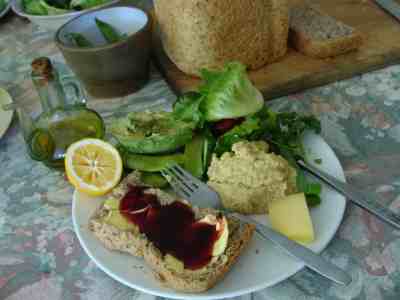 Sourdough bread and a salad make the perfect lunch
It takes for example at least ten minutes to enjoy corn on the cob, another grain which perhaps illustrates this point more emphatically.
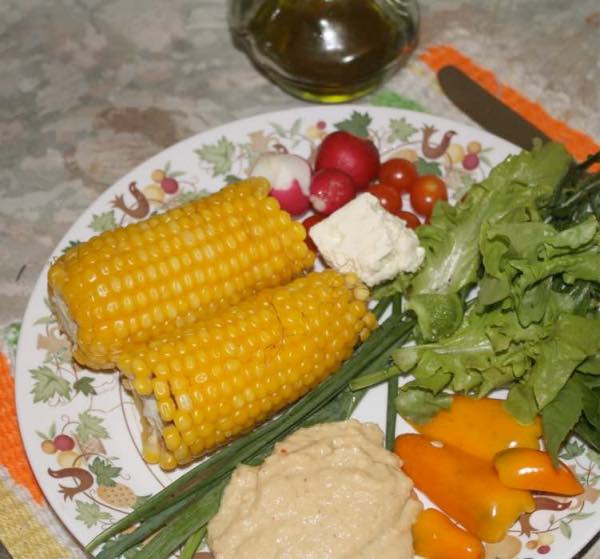 All whole grains need chewing
Quick guide
Texture of whole grains
The texture of wholegrain wheat flour recipes sometimes called "mouth-feel" is quite different. For those who make time for family meals the half hour or more relishing the deep flavours as we slowly chew is not resented. It also provides opportunities and spaces for discussion of painful subjects that might not be otherwise aired.
A powerful movement under a leading light known as Dr Fletcher reached into the highest echelons of society. Families took time to enjoy their meals and each mouthful was chewed 32 times.
Count how many chews it takes to thoroughly get through each mouthful of corn; you may be surprised that it will be around 30.
A whole grain should consist of the bran, germ and endosperm in the same proportions as found in nature.
This study determined that choline and betaine are particularly rich in the germ and bran[1].
Chewing and dementia
It came as a great surprise to scientists when they discovered that dementia and chewing our food were closely interrelated.
There remains some debate as to whether it is the chewing per se or the unrefined foods like these wholegrain wheat flour recipes that provide our brains with the added vibrant years; but in fact it makes little difference.
Whole foods that require chewing will help keep that demon at bay.
Does it comes as a surprise that one in nine Americans over the age of 65 is already showing signs of Alzheimer's Disease?
wholegrain wheat flour pizza
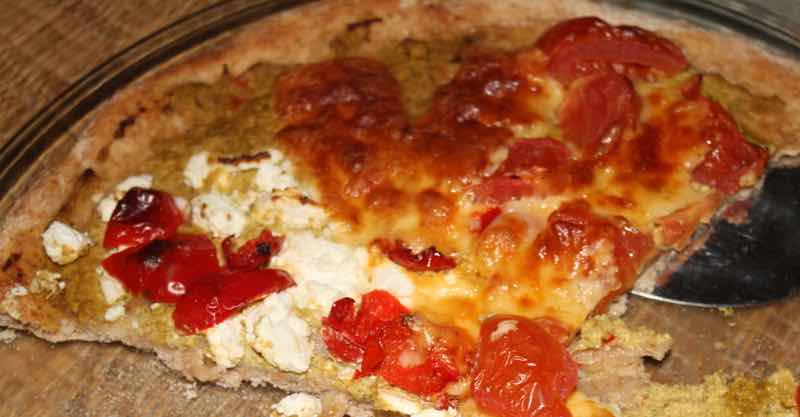 A 100% wholegrain pizza crust has to be chewed 32 times
It takes time to enjoy a pizza like this but the flavours take you to a new level of dining; they are mind-blowing.
Salt is a big issue not only with pizzas but also most commercial breads in general; returning to baking your own loaves from one of the many wholegrain wheat flour recipes certainly gives you some control of your dietary sodium intake.
Salt and high blood pressure is a controversial issue though; there are many scientists who are convinced that raising dietary potassium is a lot more effective and easier than trying to avoid all foods high in sodium.
Flavour and aroma of wholegrain wheat flour
One of the heights that few will ever experience is the aroma released as wholegrain wheat flour is being milled; in part it's like that from bread being baked but somehow deeper and yet more satisfying. It speaks of powerful nutrition and wellness.
Yeasted beer bread is one of the many options that remains firmly in the domain of the healthy loaf; that which is full of flavour and nutrients; and will not add on pounds in all the wrong places.

Very few people will even once in their whole lifetimes be able to enjoy a dish cooked from flour like this; it cannot be bought for love nor money unless you have an uncle in the milling business. It has a shelf life so millers extract the best parts, for hog food as it so happens.
Salt high blood pressure
Using flour from which most of the nutrients that give it flavour have been extracted, bakers have to add much more salt that is good for us.
Baking your own wholegrain wheat flour recipes gives you a measure of control over the amount of salt you consume; generally about half the sodium.
Salt and the associated high blood pressure is a topic we are all familiar with.
Artisan bread
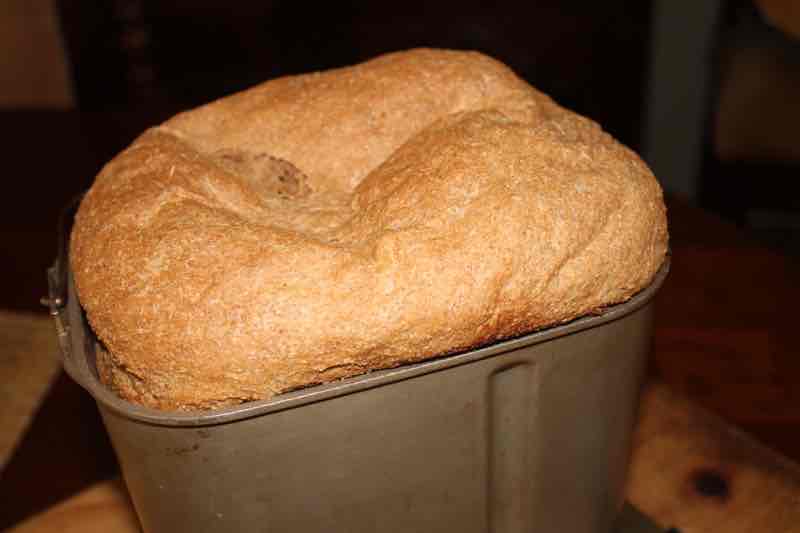
The term "artisan" speaks to me of two things. Firstly this bread is for the working man who needs food that will stay with him, providing satiety and energy.
And secondly that there is quite a lot of work required unless you have a bread machine. That means you pay quite a lot of moolah for it and rightly so, particularly if it is made with sourdough. Once having tasted slices from this loaf you'll never return to the commercial offering from the grocery store.
Low GI bread recipe
With nearly a half of all those enjoying typical grocery store meals being either fully diabetic or on the verge, low GI foods are imperative; the carbs are only slowly turned to glucose in the gut and do not provoke a sugar spike in the portal blood stream.
Helpings must continue to be small as they mostly still have a highish glycaemic load.
Sourdough starter recipe
To bake sourdough bread you must have your own starter that you will feed and use daily. It's not difficult to make but it will take a few months before it is fully developed.
With no modern instant yeasts available, bakers have for millennia prepared and kneaded their doughs using the natural ferments that are located in the bran of wholegrain wheat flour.
The Real Bread movement is adamanently against the use of modern instant yeasts. Every year in September they celebrate the baking of traditional loaves as made since the dawn of mankind.
This sourdough bread recipe is definitely worth a second thought for those frantically hoping they don't have to give up the staff of life for ever.
Stale sourdough strata
A stale sourdough strata is made to use up leftovers with added eggs and cheese; and then baked in the oven.
Easy zucchini bread recipe
This easy zucchini bread recipe lowers the glycemic-index of the usual loaf; courgettes are rich in fibre and certain carotenes that protect the eyes from age-related blindness.
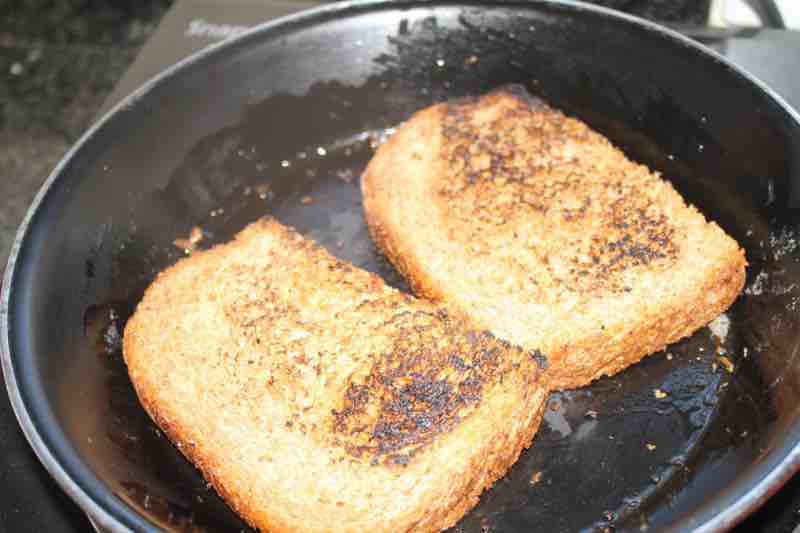
Pan-fried toast
Pan-fried toast adds another dimension to many meals; if you are looking for more variations then this is a very easy option, say for scrambled eggs at breakfast.
Scientists are saying we are getting far too much seed oil in our diets; it's highly inflammatory so rather use butter or coconut fat.
Those enjoying true wholegrains need have little anxiety about raised cholesterol but do have it tested.
The material expressed on this page is gleaned from the nutritional and environmental literature; it is clearly referenced. A plain distinction is made between the author's opinion and that which is scientifically proven. When in doubt consult your health professional.
To suggest a correction or clarification, write to Dr Bernard Preston here. Contact.
"The American Gut Project at UC San Diego School of Medicine found that the single most-powerful predictor of a healthy bowel was the diversity and variety of plants in your diet."
- Dr W Bulsiewicz MD, gastroenterologist[1].
Vegan seed bread recipe
This recipe for a vegan seed bread is really little different to our other wholegrain low GI loaves; use coconut oil instead of butter.
All seeds need to be milled before consumption; or very thoroughly chewed. Otherwise they often pass straight through the bowel without the nutrients being absorbed and may get stuck in diverticuli.
Olive bread recipe
This olive bread recipe is for those who have been advised to eschew butter and coconut oil for fat; it's a good option though the loaf doesn't seem to rise as well.
Wholegrain wheat flour recipes
Wholegrain wheat flour recipes lift us to new heights of umami flavour and nutrition; they provide a medicine chest of protection against serious disease.
When browsing use right click and "Open Link in New Tab" or you may get a bad gateway signal.
Newsletter
Our newsletter is entitled "create a cyan zone" at your home, preserving both yourself and Mother Earth for future generations; and the family too, of course. We promise not to spam you with daily emails promoting various products. You may get an occasional nudge to buy one of my books.
Here are the back issues.
- Lifestyle and ideal body weight
- What are ultra-processed foods?
- Investing in long-term health
- Diseases from plastic exposure
- Intensive lifestyle management for obesity has limited value
- A world largely devoid of Parkinson's Disease
- The impact of friendly bacteria in the tum on the prevention of cancer
- There's a hole in the bucket
- Everyone is talking about weight loss drugs
- Pull the sweet tooth
- If you suffer from heartburn plant a susu
- Refined maize meal and stunting
- Should agriculture and industry get priority for water and electricity?
- Nature is calling
- Mill your own flour
- Bake your own sourdough bread
- Microplastics from our water
- Alternative types of water storage
- Wear your clothes out
- Comfort foods
- Create a bee-friendly environment
- Go to bed slightly hungry
- Keep bees
- Blue zone folk are religious
- Reduce plastic waste
- Family is important
- What can go in compost?
- Grow broad beans for longevity
- Harvest and store sunshine
- Blue zone exercise
- Harvest and store your rainwater
- Create a cyan zone at your home
Did you find this page interesting? How about forwarding it to a friendly book or food junkie? Better still, a social media tick would help.
- Homepage
- Wheat bread
- Wholegrain wheat flour recipes
Address:
56 Groenekloof Rd,
Hilton, KZN
South Africa
Website:
https://www.bernard-preston.com