- Homepage
- Wheat bread
Wheat: How did bread lose its special appeal?
Wheat: How did bread lose its special appeal? Since the dawn of human existence the common loaf has held almost the status of a revered staple; today it's all gone.
The mere use of the word "common" in association with bread says it all.
Nutritious food for all and especially the common man.
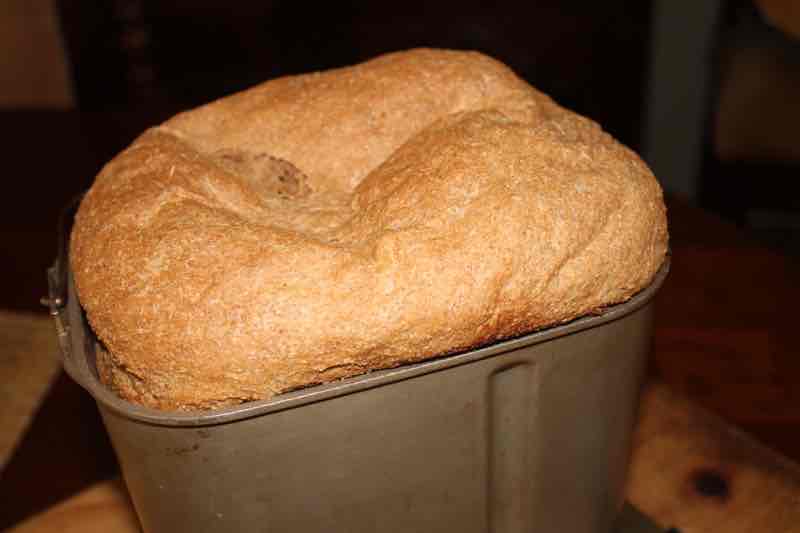 Just by looking at it
Bread like this is not to be had by the common man but only to those willing to go the extra mile.
Wheat: How did bread lose its special appeal?
Quick guide
- Wheat: How did bread lose its special appeal?
- The flavour of modern day bread
- Bread in ancient religions
- The Greek Time-god known as Chronos
- The Greed-God known as Mammon
4. 100 percent real flour
More detail
- Wheat as an important source of protein
- Wheat as an important source of starch
- Wheat as an important source of fat
- Wheat as an important source of vitamins
- Wheat as an important source of lignans
T3 pages
- Why is whole grain better?
- Special plant nutrients in wheat
- Why is sourdough so important?
- An electric flour mill for every baker
- Wholegrain wheat flour recipes
Why is whole grain better?
Wheat as an important source of protein
Unprocessed wheat is in the first instance a good source of vegetable protein. Not to the same degree as legumes but around 13% of the grain is important amino acids, including all that are essential but some in limited amounts.
As all vegetarians know, the amino acids in seeds complement those found in legumes; as in a traditional tabbouleh salad made with bulgur wheat, often with added chickpeas.
Around 20% of that protein is found in the germ and bran though the former exhibits a far better essential amino acid profile. This feature is lost obviously once the grain is refined.
Gluten is an essential protein in flour. Less than 1% of people are highly allergic to it and for the majority the problem is solved by predigesting the amino acids using the sourdough method.
That's why sourdough is so important.
The terminology used in a grain of wheat is complex; but you do need some understanding to compel you onwards on your journey.
Wheat as an important source of starch
Unrefined wheat is an important source of slow-release carb; the protein, fat and fibre all inhibit stomach emptying. It is not a highly glycemic starch; it is definitely not fattening. The glycaemic index of bulgur for example is around 50; it is a low GI food.
The starch is located mainly in the endosperm.
Wheat as an important source of fat
Wheat contains both essential acids that humans must get from dietary sources; however ALA makes up only about 5% of the total.
However the fat is located in the germ which is extracted in conventional milling, erroneously considered a waste product and goes mostly for pig food.
Wheat as an important source of vitamins
The germ and bran of wheat are the source of many important nutrients; notably vitamin E, nature's anti-coagulant and thiamine (B1) that prevents the shift in the microbiome towards pathogenic species that favour obesity.
It's worth noting that prior to the commercial milling and refining of wheat about 150 years ago, heart attacks were almost unknown.
Wheat as an important source of lignans
One other notable plant nutrient in wheat is worth mentioning; the lignans. They have an extremely important role to play inhibiting the growth of metastatic tumours. One helping of a whole grain each day lessens the likelihood of breast and prostate cancer by nearly 50% for example.
The lignans are located exclusively in the bran; this protection is almost completely lost in the refining of flour.
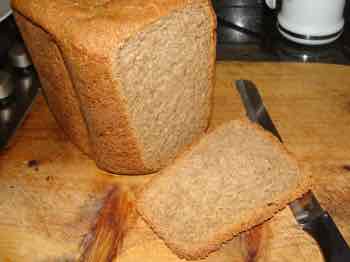 Real bread
Why is whole grain better? It is the source of so much goodness. But no longer is it available to all as it has been for millennia.
Wheat: How did bread lose its special appeal?
One bite and you will immediately be able to tell the difference between real and fake bread.
What's more you will soon discover that one slice of real bread is enough; it is so packed with goodness that it very quickly brings satiety. Perhaps even more important that leaves room for the many coloured foods that we should be enjoying daily for all those essential plant nutrients.
In short we take serious health risks if we are not getting the special plant nutrients in wheat.
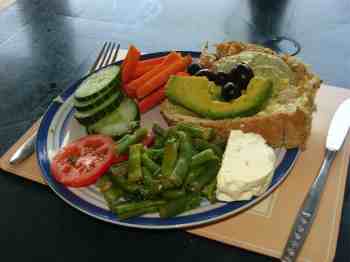 One slice of bread is enough
"The American Gut Project at UC San Diego School of Medicine found that the single most-powerful predictor of a healthy bowel was the diversity and variety of plants in your diet."
- Dr W Bulsiewicz MD, gastroenterologist[1].
Wheat: Why did bread lose its special appeal?
So why did the bread enjoyed by almost everybody for millennia lose its special appeal? How did we in the short space of one and a half centuries destroy our most revered food source? What happened to the "staff of life" making it tasteless, without nutrition and a highly fattening starch?
My sourdough bread journey has been long, extremely satisfying and health-giving; and I feel I have barely scratched the surface. But I am in essence a hobbyist, not a professional baker.
The flavour of modern day bread
As we all know the common loaf has little more flavour than cardboard. Without jams, jellies and processed meats, bread sales would plummet. The flavoursome nutrients are located firstly in the germ and bran; and secondly from the traditional sourdough method used for millennia to ferment the flour.
The industrial refining of wheat, starting in 1850 and the Chorleywood Bread Process in 1961 together produced a loaf that could be consumed quickly without much chewing; and manufactured speedily without the tedious sourdough methods of kneading, rising and beating down of the past.
Changes in texture and time required both to eat and bake the bread soon appealed to both the housewife and the consumer.
Bread in ancient religions
It is interesting that grains in general and bread in particular played such important roles in ancient religions.
Terms such as the "cereal offering" and the Bread of Life" are foundational in the Judo-Christian religions.
However modern day bread that has lost its special appeal would certainly confuse worshipers.
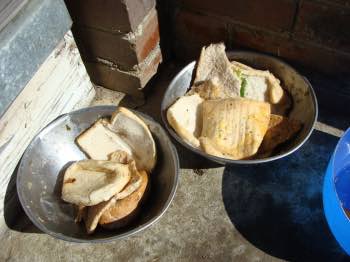 Not even the dogs will eat it
The Greek Time-god known as Chronos
Continuing with the religious metaphor, time has become a relentless driver of society; it has almost attained the status of a god.
As we bow and scrape before the Chronos-god, yielding ever more hours to work, television and social media even Christians are finding that caring for the "Temple of the Holy Spirit" is no longer a priority. We simply don't have the time to take regular exercise, grow and cook our own food; and certainly not to bake wholegrain sourdough bread.
Unbelief in the "two to one rule" is the norm; only other people get sick. For every hour you invest in wellness you will save two consulting doctors, off work and standing in the queue for chronic meds.
But you do have to pay it forwards; invest the time now and get twice back in the years to come.
The Greed-God known as Mammon
Every village for millennia had a stone mill of one sort or another. Locally ground wheat, unsifted and consumed within a few weeks was the norm. Today true unrefined flour is almost impossible to purchase; it has a shelf life of no more than a week or two.
The Mammon-god declares that it makes far more sense to mill the wheat at source, extract the the best parts for animal feed and then dispose of whatever is left to those dumb enough to eat cake and bread flour.
Modern economics and greed lie at the heart of the conundrum that those who want healthy, nutritious food are confronted with.
Storing wheat berries
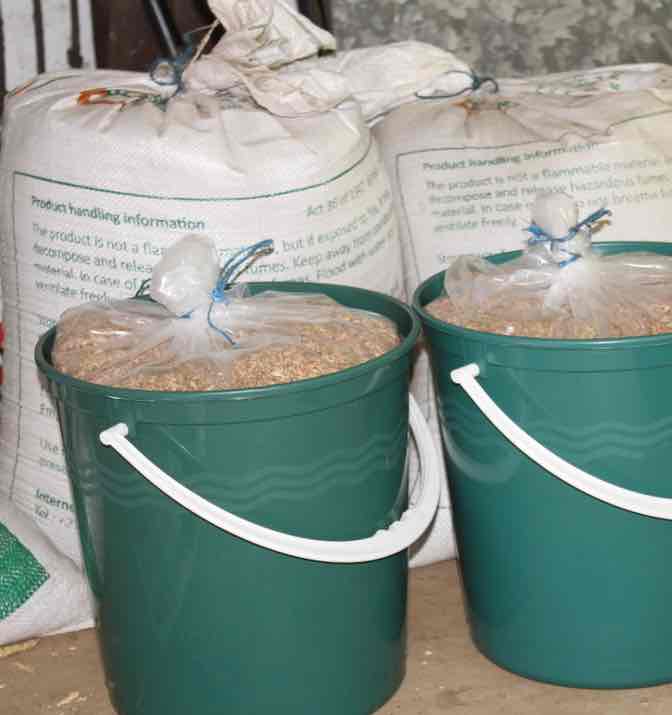
Wheat has many enemies, the greatest of which is the unconcerned commercial miller who worships the Mammon-god alone; but moisture, air and the granary weevil need to be considered also.
Unless you can get clean wheat from a farmer you will have to learn how to winnow, seal the grain in air-tight buckets and freeze for two weeks before it can be safely stored for years.
Storing wheat berries is a subject all on its own.
Local mills
Until local mills return to favour and there is no sign of that happening, we will never regain our love and respect for "the staff of life;" it's gone for ever and with it protection against heart disease, cancer and obesity.
For those willing to paddle upstream, purchase a small stone mill and an electric oven you can bake a loaf of the best bread in the world for under a dollar. The cost of the hardware will be paid off within a year if your desire is for a fresh loaf every day.
However this journey is not for sissies; acquiring clean wheat, freezing it for two weeks to protect against weevils and milling the flour is time-consuming. Chronos would declare you quite mad to even consider it.
Why is whole grain better? It has real flavour, protects us against many serious diseases and is a quarter of the price if you have a mill.
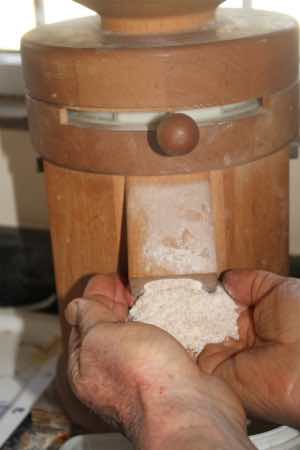
An electric flour mill for every baker should be a consideration. Everything else is processed in some way; it's the only way to get true wholegrain.
True wholegrain flour
The Big Fat Flour Lie allows millers internationally to legally label their product as "wholemeal" provided they do not remove more than 40% of the grain; most or all of the bran and germ.
What is the healthiest type of flour is a question that every baker should be able to answer at least in part; it's not just a matter of taste and mouth feel. If one kind could give protection against heart disease and cancer but another not, that would surely be a consideration?
True wholegrain wheat flour recipes are increasingly difficult to find; the public doesn't want them. The food has more flavour and may be more nutritious but it takes time to chew it.
All lies ultimately lead us down the garden path but this one has condemned virtually the whole planet to tasteless bread that makes us obese and predisposes us to type-2 diabetes.
It is today almost impossible to purchase true 100 percent real flour that has not been ultra-processed.
wholesome bread recipes
Baking sourdough the old-fashioned way of kneading is unnecessarily tiresome. It is extremely gratifying, may taste better and be more nutritious but it will take up most of every morning; enter the bread machine.
In just five minutes you can mill the flour and prepare the dough; four hours later you will have the finest loaf of bread.
This Panera bread menu recipe remains our basic source.
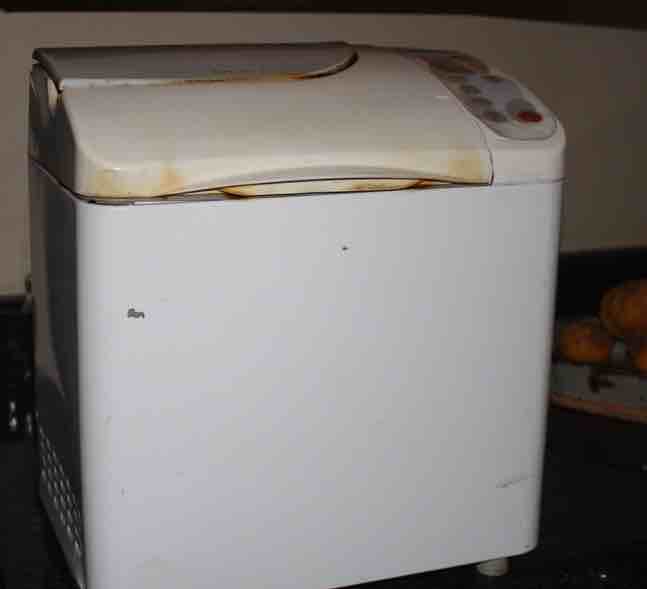 Just five minutes to bake the best bread in the world
wholesome recipes
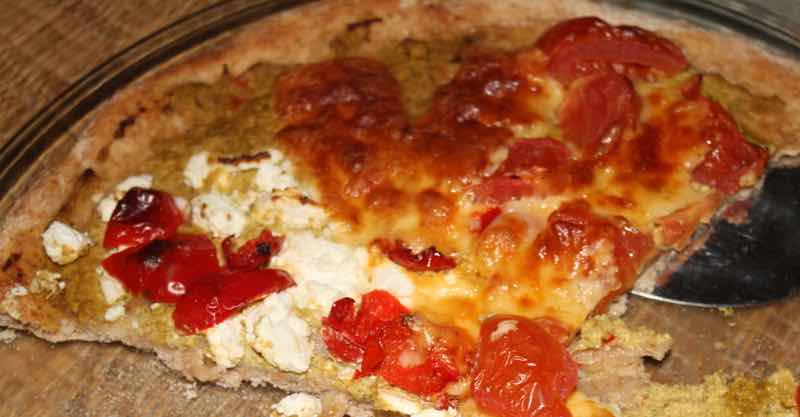
Baking with wholegrain flour is different; it will challenge all your recipes but once you've tasted homemade sourdough pizza crust you will never turn back.
You can also use slices of your true 100% sourdough bread, perhaps crumbed in many of your recipes.
Cakes pancakes and cookies alas will in the future be only for high and holy days; and French peasants. Marie Antoinette lost her head; I may too.
Wheat: How could bread regain its special appeal?
This journey with true wholegrain wheat began some 40 years ago when we were first introduced to a home mill. The seed was planted but it took another 10 years to acquire our own Hawo.
We have not even once looked back. Having tasted true sourdough baked with wholegrain you could never go back to the industrial loaf; it's that good.
True wholegrains are one of the four pillars on which our wellness firmly stands; it's no mean thing when approaching 80 for a couple to be able to declare they take absolutely no chronic medication. A nasty spider bite has recently spoiled my boast that I have not consulted a doctor in years.
From the journals
When browsing use right click and "Open Link in New Tab" or you may get a bad gateway signal.
The material expressed on this page is gleaned from the nutritional and environmental literature; it is clearly referenced. A plain distinction is made between the author's opinion and that which is scientifically proven. When in doubt consult your health professional.
To suggest a correction or clarification, write to Dr Bernard Preston here. Contact.
Newsletter
Our newsletter is entitled "create a cyan zone" at your home, preserving both yourself and Mother Earth for future generations; and the family too, of course. We promise not to spam you with daily emails promoting various products. You may get an occasional nudge to buy one of my books.
Here are the back issues.
- Lifestyle and ideal body weight
- What are ultra-processed foods?
- Investing in long-term health
- Diseases from plastic exposure
- Intensive lifestyle management for obesity has limited value
- A world largely devoid of Parkinson's Disease
- The impact of friendly bacteria in the tum on the prevention of cancer
- There's a hole in the bucket
- Everyone is talking about weight loss drugs
- Pull the sweet tooth
- If you suffer from heartburn plant a susu
- Refined maize meal and stunting
- Should agriculture and industry get priority for water and electricity?
- Nature is calling
- Mill your own flour
- Bake your own sourdough bread
- Microplastics from our water
- Alternative types of water storage
- Wear your clothes out
- Comfort foods
- Create a bee-friendly environment
- Go to bed slightly hungry
- Keep bees
- Blue zone folk are religious
- Reduce plastic waste
- Family is important
- What can go in compost?
- Grow broad beans for longevity
- Harvest and store sunshine
- Blue zone exercise
- Harvest and store your rainwater
- Create a cyan zone at your home
Did you find this page interesting? How about forwarding it to a friendly book or food junkie? Better still, a social media tick would help.
- Homepage
- Wheat bread
Address:
56 Groenekloof Rd,
Hilton, KZN
South Africa
Website:
https://www.bernard-preston.com