- Homepage
- Nutritional value of corn for humans
Nutritional value of corn for humans
This page about the nutritional value of corn for humans considers whether we should be eating this carb, what its merits are and if there really is such a dreadful downside of all starches?
Human can survive perfectly healthily without any starch whatsoever; unlike protein and fats which are essential for the body to build muscle, brain tissue and every cell in fact.
But some organs are completely reliant on glucose for energy; in particularly the brain, eyes and kidneys[1].
Normally this important sugar molecule is provided by the digestion of dietary starches; but the body is also able to convert amino acids and fats into this important monosaccharide by a process called gluconeogenesis.
This process of gluconeogenesis occurs primarily in the liver, to a lesser extent the kidneys and the lining of the small intestine.
Historically humans have eaten plenty of starch for energy; primarily corn, wheat and rice. But there are of course many other sources of carbohydrate; potatoes, apples and so on.
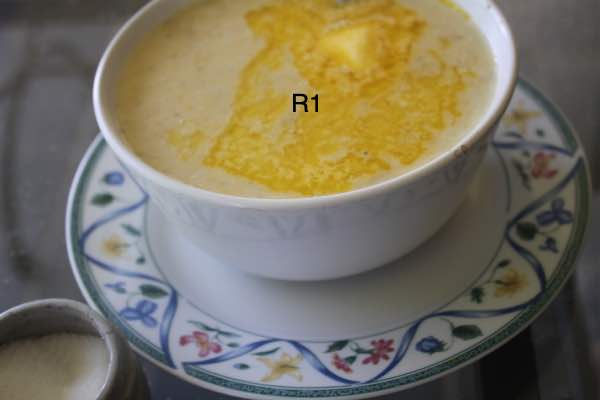 True wholegrain maizemeal porridge should be incredibly inexpensive.
Corn is a grain
Corn is a grain of course. It is made up of three parts.
- The endosperm generally known as cornflour or maizemeal.
- The germ which is where most of the minerals, vitamins and fatty acids are located.
- The bran which protects the inner grain from air but also containing the fibre, some vitamins and minerals; and a portion of the more important essential amino acids.
The endosperm is that part which we humans have grown to love; it is used to make grits and cornflour. It requires no chewing, one does not have to spend long minutes "fletcherising" and it slides deliciously down the throat. But it is completely devoid of fibre and nutrients; technically it should not be considered a food.
How corn fell into disrepute as good food for humans is a rather sordid story; all about greed and the shortsightedness of policy makers. Every town and village should have its own mill.
The endosperm is also that part of corn, devoid in nutritional value that millers utilise in South Africa to prepare "super-refined maizemeal." Used as a primary food source by the poor it is one of the chief causes of the stunting that characterises more than a quarter of our children.
For the wealthy it is used to make cornflakes, with a few synthetic minerals and vitamins added; and is extremely expensive. Some of their children too suffer from mental and physical disabilities associated with malnutrition; for example requiring a person to read exam questions to them and even scribe their answers.
Phytonutrients in wholegrain yellow corn
Yellow corn is a particularly rich source of a very important phytonutrient called beta-carotene; it consists of two vitamin A molecules joined together. Research done in South Africa showed that because of its role in immunity, an astonishing 42 children die each day from a deficiency.
White maize has no beta-carotene.
Why do we choose yellow maize? Well, is it not perfectly obvious? It's cheaper, tastes better and no farmer would feed his animals on white corn.
Not that true white corn on the cob is bad; it's also excellent food. But yellow maize is even better.
Yellow maize is also an excellent source of another carotene known as beta-cryptoxanthin; the only substance proven to give protection against dementia.
Yellow corn gives profound protection against the chief cause of blindness in the elderly; from adult-onset macular degeneration. Two carotenes called lutein and zeaxanthin are deposited almost exclusively by the body in the retina of the eye where they absorbe the damaging blue radiation.
Corn in general like all grains is a reasonably good source of betaine; though about a quarter of that in wheat. Spinach is excellent too. This phytonutrient is extremely important in human health for its role in the methylation of toxic homocysteine, a breakdown product of protein metabolism.
Betaine is located equally in the germ and bran; there is none in refined maizemeal.
Fibre in wholegrain corn
Both white and yellow corn are rich sources of fibre located in the bran; but there is an alarming rise in colorectal cancer especially in younger people associated with constipation since grains have been routinely ultra-refined.
A cup of popcorn contains more than a gram of fibre. The required dietary allowance is about 35g daily; less than 5% of those enjoying typical grocery store food are getting sufficient. That is devastating for the colon and the friendly bugs known as the microbiome that inhabit the intestines.
A fresh ear of corn contains between 2 and 4 grams of fibre.
To get full value from this fibre one needs to "fletcherise;" chew each mouthful at least 30 times. Reckon on about ten minutes to enjoy a "mealie" as we call it in South Africa.
This fibre contributes to the feeling of fullness after eating wholegrains; the brain is messaged by the "incretin hormones" telling us when we've had an elegant sufficiency.
 Fletcherise your mealie; chew it thoroughly.
Carbs in corn
A large ear of corn contains nearly 30 grams of carb, about 4g of which is indigestible fibre; largely that which is insoluble but not entirely.
One cup of wholegrain grits also contains about 30 grams of carb.
For those concerned about their weight, we would recommend limiting the glycemic load; half a cob or small bowl of these extremely nutritious foods.
The amount of carb recommended in our diets is a highly contentious issue. Certainly it should be under 150 grams in a healthy, active adult. For the obese they ought to focus on less than 50g; and half of that for a brittle diabetic.
Allowing the grits to "retrograde" overnight significantly reduces the GI; and improves the texture and mouthfeel.
 Added fat helps with the absorption of the carotenes.
How much is a large bowl of wholegrain maize meal? Actually, if you can find it, pretty cheap; about one tenth of the price of cornflakes.
Minerals in yellow corn
A yellow cob of corn is particularly high in potassium and low in sodium; this makes it an ideal food for those suffering from raised blood pressure. The ratio is an excellent 18.
Yellow corn is also an excellent source of dietary magnesium and zinc; with small amounts of iron and calcium. Once refined there is zero.
Vitamins in yellow corn
Yellow corn as stated above is an extremely good source of vitamin A; mainly from the beta-carotene which gives the grain its beautiful colour.
It has also has many of the B-vitamins, in particular niacin protecting the body against pellagra. And folate which is indispensable in the war against anaemia and very serious birth defects.
Regaining our sanity
To benefit from the nutritional value of corn for humans without the threat of becoming obese, a person is faced with numerous options. You could frequent an organic farmers' market in the hope of finding fresh, wholegrain maize that has been newly harvested.
Alas those sugars that make corn on the cob so delicious turn quite quickly into starch after being harvested; look for bright green husks.
Corn in flower is a beautiful sight to behold; promise of the harvest to come.
The nutritional value of corn for humans is about the whole grain; be it a recently-harvested mealie or the freshly milled dried seeds.
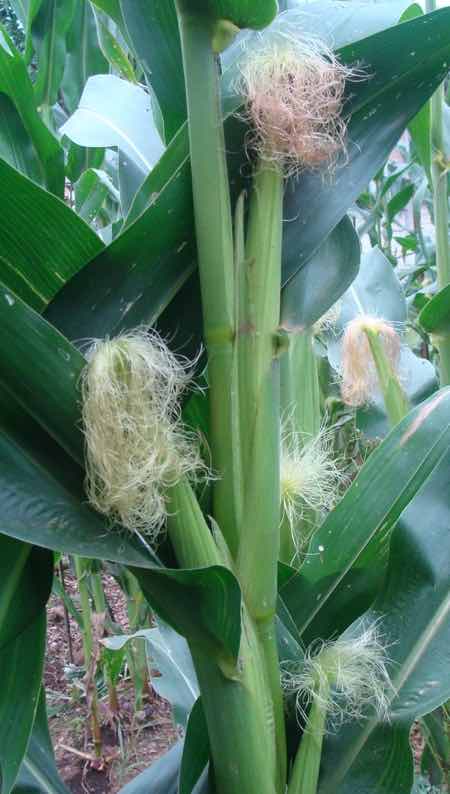
How to grow corn
Another option is to find out how to plant maize; frankly it's one of the easiest vegetables to raise but it does have a long growing season. Patience is a virtue.
How to grow corn is for every garden looking to produce whole grains. Removing the stalk after harvesting is quite hard work; makes the perfect foundation for the next compost heap.
Milling corn
Alas today it is almost impossible to purchase true wholegrain maizemeal; it has a limited shelf life. Known in America as grits and in Europe as polenta, if you locate it, quite likely it will be reckoned as a health food and very expensive. And beware because it may still be partially refined.
In days of old, each village had its own mill, alas no longer. Those who are truly determined to escape the horrors of refined cornmeal will have to purchase their own electric grinders.
The nutritional value of corn for humans is about the whole grain; this has become core to our ethos.
Wholegrain cornmeal is what we need; wonderful satisfying food.
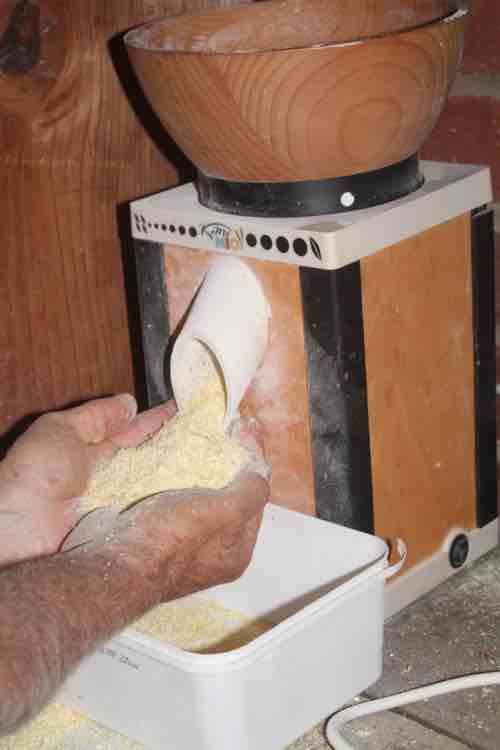 Bargain-priced cornmeal
When you cost in the price of your own home ground cornmeal using grain straight from the farm you will realise you have an absolute bargain; grits at R4/kg. That is 10 US cents per pound; I'm not making this up.
Purchasing your own corn flour milling machine is not as crazy as it might seem; one helping of a true whole grain lowers the risk of breast and prostate CA by nearly 50%. That's not to be sneezed at; my PSA at the last test was 0.9. That's an anecdote but it does make one think.
Yellow corn
In many societies there is the mistaken notion that yellow corn is for animals and the white grain for humans; how this came about I have no idea but it is deeply entrenched in some nations.
In America yellow sweetcorn is the food of choice for humans but in Africa white is chosen in the main.
We choose yellow corn for three reasons.
- It has more flavour.
- It is a rich source of beta-carotene and other important phytonutrients.
- It is very high in potassium and low in sodium.
True wholegrain corn foods
Once you have your own corn flour milling machine, you can prepare a wide range of highly nutritious meals that will not make you fat; and will provide you with protection against cancer, heart disease and blindness.
Surprisingly a little lesson in how to cook corn may be necessary; so many of us are far remote from preparing whole grains.
That is the power of whole grains; if you can find them. You will become enchanted with the benefits of mealies and will be able to pour scorn on those who constantly denounce maize, wheat and rice; it's the refined carbs that cause high blood pressure, obesity and diabetes.
Nutritional value of corn for humans
Nutritional value of corn for humans is about the whole grain; but where can you buy it? You may need to acquire a small mill.
The material expressed on this page is gleaned from the nutritional and environmental literature; it is clearly referenced. A plain distinction is made between the author's opinion and that which is scientifically proven. When in doubt consult your health professional.
To suggest a correction or clarification, write to Dr Bernard Preston here. Contact.
From the journals
When browsing use right click and "Open Link in New Tab" or you may get a bad gateway signal.
Newsletter
Our newsletter is entitled "create a cyan zone" at your home, preserving both yourself and Mother Earth for future generations; and the family too, of course. We promise not to spam you with daily emails promoting various products. You may get an occasional nudge to buy one of my books.
Here are the back issues.
- Lifestyle and ideal body weight
- What are ultra-processed foods?
- Investing in long-term health
- Diseases from plastic exposure
- Intensive lifestyle management for obesity has limited value
- A world largely devoid of Parkinson's Disease
- The impact of friendly bacteria in the tum on the prevention of cancer
- There's a hole in the bucket
- Everyone is talking about weight loss drugs
- Pull the sweet tooth
- If you suffer from heartburn plant a susu
- Refined maize meal and stunting
- Should agriculture and industry get priority for water and electricity?
- Nature is calling
- Mill your own flour
- Bake your own sourdough bread
- Microplastics from our water
- Alternative types of water storage
- Wear your clothes out
- Comfort foods
- Create a bee-friendly environment
- Go to bed slightly hungry
- Keep bees
- Blue zone folk are religious
- Reduce plastic waste
- Family is important
- What can go in compost?
- Grow broad beans for longevity
- Harvest and store sunshine
- Blue zone exercise
- Harvest and store your rainwater
- Create a cyan zone at your home
Did you find this page interesting? How about forwarding it to a friendly book or food junkie? Better still, a social media tick would help.
- Homepage
- Nutritional value of corn for humans
Address:
56 Groenekloof Rd,
Hilton, KZN
South Africa
Website:
https://www.bernard-preston.com