- Homepage
- Weight Loss
- Myths about dieting
- The Dying Gasps of the Dieting Era
The dying gasps of the dieting era
This opinion piece on the dying gasps of the dieting era ponders the fervid belief of some that weight-loss and obesity will soon be easily and safely achieved with new medications.
It provides an alternative viewpoint to that of Yoni Freedhoff, associate professor of family medicine at the University of Ottawa; he has a very powerful CV.

Quick guide
A generalised cynicism about dieting
There is undoubtedly a generalised and widespread cynicism about the effectiveness of dieting and lifestyle change to achieve real and lasting results. After one year the research is pretty conclusive that only 5% of those attempting any one of the vast array of programs have satisfactorily lost a significant amount of weight; and many are actually heavier.
95% are anxious, angry and stressed that once again they have been duped into believing that by simply doing this or that, permanent results can easily be achieved; and rightly so.
"There is little support for the notion that diets lead to lasting weight-loss or health benefits.
We concluded most would have been better off not going on them at all."
- Prof Traci Mann, U of Minn, Health and Eating lab[1]
An equal cynicism about lifestyle changes
The Look AHEAD trial too seriously called into question whether lifestyle changes could bring about meaningful weight-loss[1]. A whole generation of doctors and patients alike have returned to the belief that obesity is a disease best treated with medication.
But that trial was doomed even before the first patient enrolled. It was based on the use of an ultra-processed protein drink; it was clearly not sustainable.
And as we all know any programme, be it lifestyle change, medication or diet that is not sustainable will fail.
Only make changes that you are prepared to continue with for the rest of your life; anything less is blowing in the wind and doomed to fail.
Fat acceptance
There is a large group of people who fundamentally believe that weight-loss efforts are futile and that it's time to accept that they are obese; period. And there is strong research confirming that repeated loss and regain of the pounds is far worse than not starting down the dieting road in the first place.
But we should challenge Dr Freedhoff's statement that "scales do not measure the presence or absence of health" and that fat-acceptance is okay. Just one small example is that researchers have clearly shown that the obese are nearly 20 times more likely to have a total knee replacement; that is not "small beer."
The dying gasps of the dieting era
In a commentary entitled "The Bell Tolls for the Diet Era" Yoni Freedhoff, MD writes enthusiastically about the obesity medications that have successfully achieved weight losses exceeding 20% of a person's body mass[2].
That is indeed impressive. There is however a caveat attached that he does not care to emphasise; they too are for life. Let those starting on weight-loss medications beware; the moment they stop taking the drugs, the flab will return.
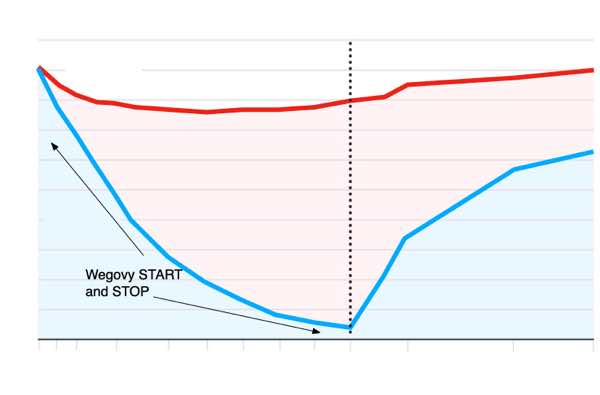
If we are not willing to accept the significant side effects and cost of weight-loss medications, taken for the rest of our lives, then it is better not to undertake a journey down that cul de sac either.
Nausea, vomiting and diarrhoea are experienced by up to 50% of those taking GLP-1s. Are we willing to accept that for the rest of our lives should we be in the wrong half?
Loss of lean muscle mass
Weight-loss is almost inevitably accompanied by loss of muscle mass; that means increasing weakness and frailty. This applies equally whether it is achieved by dieting or taking GLP-1 receptor agonists.
Many researchers warn about the increased risk of "sarcopenia and frailty" if weight loss is treated casually, without accompanying exercise to counter the loss of muscle.
Those advocating using food as medicine rather than taking weight-loss drugs point out that type-2 diabetes can be put completely into remission by dietary interventions alone; and always accompanied by exercise to lower postprandial blood glucose and counter loss of lean muscle mass.
I will show you a better way
For those who are not willing to accept all these negatives about obesity, the ineffectiveness of diets and the nasty side effects of GLP-1s, I will show you a better way. It brings us back to honestly facing up to what caused us to put on those pounds in the first place.
Whilst the subject is exceedingly complex with many twists and turns, we will inexorably find that two features are common throughout all the discussions about obesity. Until we are ready to face up to them, nothing will work and we will have a lifetime struggle with poor health and dieting; and a foreshortening of the good years of our lives.
Fully a third of British people of 55 are already disabled; a half by the age of 65. Thoughts about the dying gasps of the dieting era are just wishful thinking.
1. A sedentary lifestyle
The modern human being spends a great deal of his or her life sitting in a chair. It may be in a vehicle, in front of a computer or on the couch.
A sedentary lifestyle almost certainly means insulin-resistance and that is the road to diabetes; inflammation in our joints, muscles and organs. Pain will frequently be our constant companion.
Face that otherwise dieting and pills will for the majority be central features for the rest of our lives.
2. Refined carbs
Prior to the widespread milling and refining of wheat some 150 years ago, according to cardiologist Dr Wilfred Shute heart attacks were very rare. Today cardiovascular conditions are the most common cause of death.
Today refined carbs are the norm; highly glycaemic, they are the primary cause of obesity. It is now almost impossible to purchase freshly-milled true wholegrain flour.
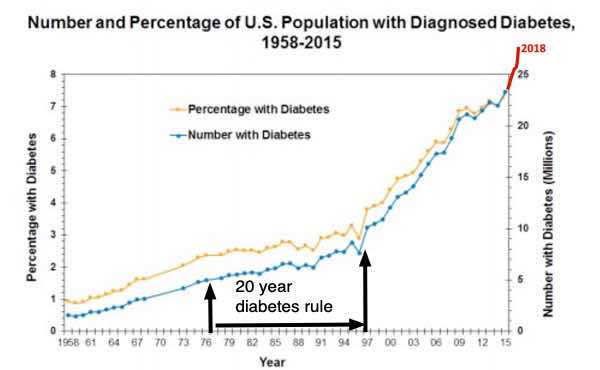
The obesity pandemic really began about 50 years ago when the McGovern Select Committee steered Americans away from animal fats and encouraged them to eat more carbs. It was not long before the erroneous cholesterol theory was widely accepted worldwide; obesity and type-2 diabetes began to soar; and continue to do so.
Unrefined carbs largely unavailable
It was around this time when humans made a massive swing away from unrefined carbs; and began instead to consume large amounts of high glycaemic starches and sugar. Food devoid of fibre and fat became the driving force behind hunger; people started to feel peckish not long after finishing their meals.
Mouthfeel became all-important; anything that required chewing was shunned. Whole grains like brown rice were labelled health foods and priced out of reach of the majority.
Few people eat corn on the cob with any regularity; the only readily available unprocessed grain. It's estimated that Americans eat about 15 portions annually. One in five Brits eat no whole grains at all.
We grew to love sweet foods; sugary colas became the order of the day.
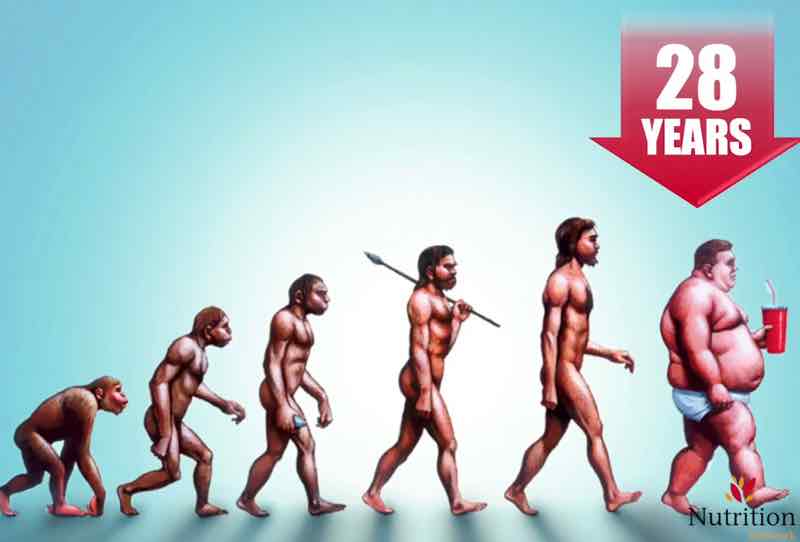 Within 30 years of the McGovern recommendations, Americans became obese.
It was around this same time when South African researcher, Dr George Campbell proclaimed his 20 year diabetes law; two decades after moving to the cities, a more sedentary way of life and large amounts of dietary sugar they succumbed to the disease.
The best loaf in the whole world
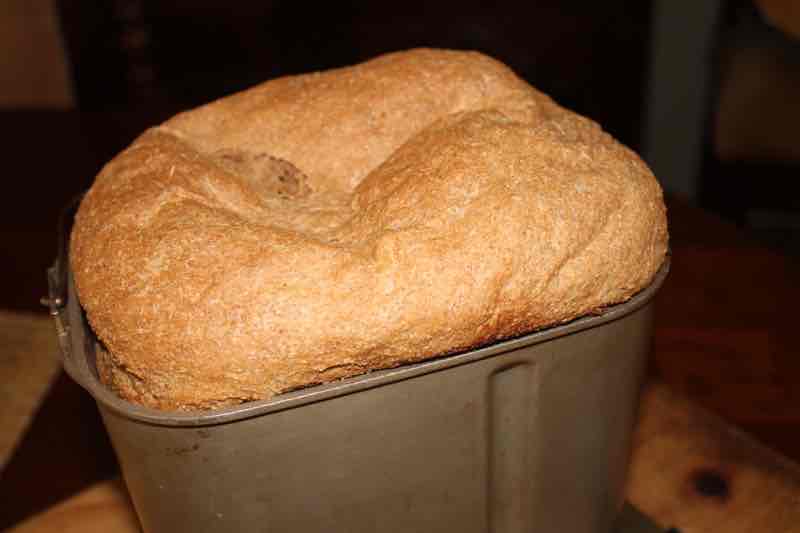 A sourdough loaf made with 100% real wholegrain flour
One of the serendipitous discoveries was that after purchasing a small stone mill and a bread machine, we could bake such a nutritious and tasty loaf, taking up just five minutes of our time.
It is almost impossible to purchase bread like this; it's proven that by eating true whole grains we will slowly but steadily lose weight. Just as important, because the lignans are retained in the bran we have nearly 50% protection against breast and prostate cancer. Addressing the causes of obesity could never have been more pleasant; the loaf is not in the slightest bit heavy.
In worship of Father Time
All of this happened at a period in history when humans became increasingly pressured by time; it almost became a deity, ruling our lives.
With the large number of hours sucked up by television and social media, many of us feel that we simply cannot make the time to exercise daily and return to the precepts of slow cooking; and meals enjoyed at a leisurely pace with meaningful round the table conversation and chewing the cud.
A bridge too far
For the majority making time to go against the flow is simply a bridge too far; we avoid thinking about the consequences and pretend to be surprised and even angered when the fruits of our lifestyles become irritating, painful and frankly disabling.
But it need not be so; making the time to take short, brisk walks daily and a return to whole foods is not nearly as difficult as we imagine. Like giving up smoking, the battle is won between the ears; the decision made, many find they are able to move onward and upwards to a healthier lifestyle.
A spiritual exercise
For some the journey back to health is made easier when we discover that God does not live in temples, cathedrals and mosques but in the hearts of those who worship him. As Christians we believe that the human body becomes the Temple of the Holy Spirit when we invite him into our lives; and that he empowers us to institute these life-giving changes.
It is hoped that this opinion piece on the dying gasps of the dieting era provides more answers than new questions.
In short, diets get thee behind me, begone.
Treating obesity casually
Professor Freedhoff anticipates a time in the near future when these medications become so effective that the treatment of obesity will become as "casually and effectively as high blood pressure in the average family doctor's office."
We shudder to even think of that day; loss of muscle mass, insidious weakness and frailty are inevitable.
A rather different notion
Personally I have other notions; and I believe the "casual" treatment of high blood pressure is one of the underlying reasons why cardio-cerebral conditions have become the leading causes of premature death.
Just as we evade contemplating the causes of obesity, so we have in the past refused to face up to the causes of hypertension; in fact they are not dissimilar.
My understanding is that obesity is not a disease. It's a symptom of a very poor lifestyle; addressing it "casually" invites serious unintended consequences.
Successful treatments address the causes rather than the symptoms; the dying gasps of the dieting era.
Bernie's scientifically proven weight loss programme
After much reading of the literature and spending a lot of time making different lifestyle changes, I have come up with I have called Bernie's scientifically proven weight loss programme; it is not a diet.
Incomprehensible no doubt to Professor Freedhoff, there are a great many people who have no desire to take medication for the rest of their lives; and are ready to ring in the changes necessary to get such medical issues under control.
Prof Freedhoff acknowledges it is possible, provided we describe our wellness as "results not typical." And he's right. The brave new lifestyle that includes daily exercise, mostly whole grains and very little sugar is sadly dismissed by the majority.
On a personal note
In our upper seventies, the good wife and I take no medication whatsoever, have no health issues and are daily busy from before dawn until after dusk; and for that we are eternally grateful. It can be done; my A1c is now a very satisfactory 5.4%.
Had I simply treated my prediabetes with medication, I would never have discovered the joys of whole grains, the best artisan bread in the world and the wonder of unrefined polenta. I would not have challenged my mind to unravel the meanings of resistant starch and retrogradation; the importance of fibre and the microbiome. I would still be taking weight-loss drugs, quite possibly feeling frequently nauseous.
"Two roads diverged in a wood and I took the one less traveled by; and that has made all the difference."
- Robert Frost
I am so glad I took the road less traveled by.
Where I would whole-heartedly agree with Professor Freedhoff is that the bell tolls for the diet era; in fact it's been pealing loudly and clearly for a good few decades.
Diets simply don't work; does the bell not also toll for medication that treats symptoms only?
why do so many quit the weight-loss drugs?
What Professor Freedhoff conveniently ignores is that 70% of obese people quit the medication within a year. I'm quite sure he has read the research findings, considered them but chooses to dismiss them. We should not, remembering the Wegovy trial findings about stopping the drug.
The dying gasps of the dieting era
The dying gasps of the dieting era; is it a wish come true? Most of us would agree with the sentiment but that does not spare us when presented with the next sensational programme that guarantees success, be it a new drug or another gimmick.
No treatment that addresses symptoms rather than causes will even vaguely come close to a cure. Is that not basic medicine, Professor Freedhoff?
The feeling of fullness after eating can be achieved more effectively and safely by using food as medicine than by casually taking weight-loss drugs.
The material expressed on this page is gleaned from the nutritional and environmental literature; it is clearly referenced. A plain distinction is made between the author's opinion and that which is scientifically proven. When in doubt consult your health professional.
To suggest a correction or clarification, write to Dr Bernard Preston here. Contact.
From the journals
When browsing use right click and "Open Link in New Tab" or you may get a bad gateway signal.
Newsletter
Our newsletter is entitled "create a cyan zone" at your home, preserving both yourself and Mother Earth for future generations; and the family too, of course. We promise not to spam you with daily emails promoting various products. You may get an occasional nudge to buy one of my books.
Here are the back issues.
- Lifestyle and ideal body weight
- What are ultra-processed foods?
- Investing in long-term health
- Diseases from plastic exposure
- Intensive lifestyle management for obesity has limited value
- A world largely devoid of Parkinson's Disease
- The impact of friendly bacteria in the tum on the prevention of cancer
- There's a hole in the bucket
- Everyone is talking about weight loss drugs
- Pull the sweet tooth
- If you suffer from heartburn plant a susu
- Refined maize meal and stunting
- Should agriculture and industry get priority for water and electricity?
- Nature is calling
- Mill your own flour
- Bake your own sourdough bread
- Microplastics from our water
- Alternative types of water storage
- Wear your clothes out
- Comfort foods
- Create a bee-friendly environment
- Go to bed slightly hungry
- Keep bees
- Blue zone folk are religious
- Reduce plastic waste
- Family is important
- What can go in compost?
- Grow broad beans for longevity
- Harvest and store sunshine
- Blue zone exercise
- Harvest and store your rainwater
- Create a cyan zone at your home
Did you find this page interesting? How about forwarding it to a friendly book or food junkie? Better still, a social media tick would help.
- Homepage
- Weight Loss
- Myths about dieting
- The Dying Gasps of the Dieting Era
Address:
56 Groenekloof Rd,
Hilton, KZN
South Africa
Website:
https://www.bernard-preston.com