- Homepage
- Wheat bread
- Why is whole grain better?
- Winnowing Grains At Home
Winnowing grains at home
Winnowing grains at home is for those who are determined to enjoy better tasting, wholesome carbs that will not make you obese.
It's almost impossible to purchase true wholemeal because the oils start to go rancid once the kernel is cracked.
 Winnowing wheat
Quick guide
Why go to all that effort?
So why would you want to spend time and effort winnowing grains at home in the first place? It sounds like a crazy idea when you can buy what you think is perfectly good flour at the grocery store for a reasonable price.
Big Fat Flour Lie
The answer is simply that you cannot buy perfectly good flour at the grocery store; not for any price. That is deliberately obscured from us by what is known as the Big Fat Flour Lie.
Ask any 10 bakers where they purchase their wholegrain flour or maizemeal and they will look at you like you have a screw loose; at the grocery store, of course. It's doubtful that even one knows the truth.
That's what it is all about; lies and truth. This whopper, perhaps more than any other is the underlying cause of the obesity pandemic that is engulfing the world and causing so much misery; in reality it is a spiritual issue.
By international law millers may legally label their flour as "wholemeal" provided they do not extract more than 40% of the goodies; the germ and the bran. That is sold at great profit to the farmers for animal feed; the best part of the grain.
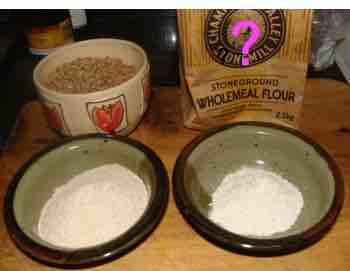 The Big Fat Flour Lie
The bowl of flour on the left has been stone-milled after winnowing grains at home; wheat in this instance. There is no separation of the three streams of endosperm, germ and bran.
Notice that on the right is labelled "stone ground wholemeal flour." Even a child can see they are quite different. Vitally important nutrients that protect us from heart disease, strokes and cancer[1] have in large measure been extracted.
So if you want to be healthy, fit and strong then winnowing grains at home is for you. You will soon discover it's a lot more rewarding that pumping iron at the gym too; it is good exercise.
Buy your grains straight from the farmer
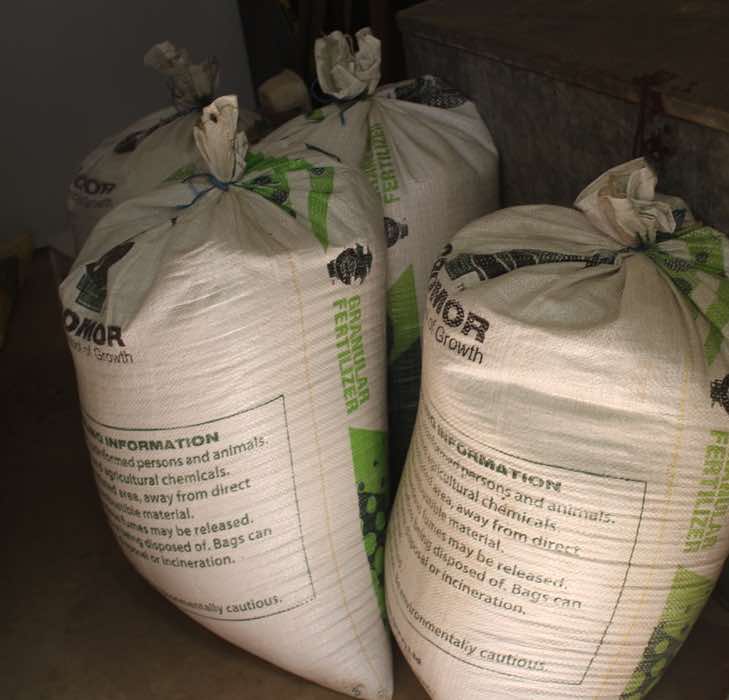 Wheat direct from the farmer
I'm assuming you are not growing the grain yourself. Then you must thresh it first to start the process of separating out the chaff; the dry husks that contain and protect the seed.
It is likely possible to purchase the grain on line; it does not have a limited shelf life like the milled flour. It will have been winnowed but shall almost certainly also have been exposed to phostoxin, a powerful chemical used to kill the weevils.
Perhaps that does not bother you because you don't know about it but the price certainly shall; it will also cost you a great deal more.
 The wheat must first be sieved
So start putting out feelers to locate a farmer who would be willing to sell you wheat or maize directly. Perhaps he drives to town to shop and will deliver the sacks or you may have to take a pleasant drive in the country.
Yes you will have to cost that in to the price of your flour; to my mind a lot more pleasant than a cruise and you'll arrive home without a bloated belly and the prospect of two ghastly months of dieting.
First the wheat must be sieved to remove dust and dirt.
 Sieving the wheat
150kg per annum
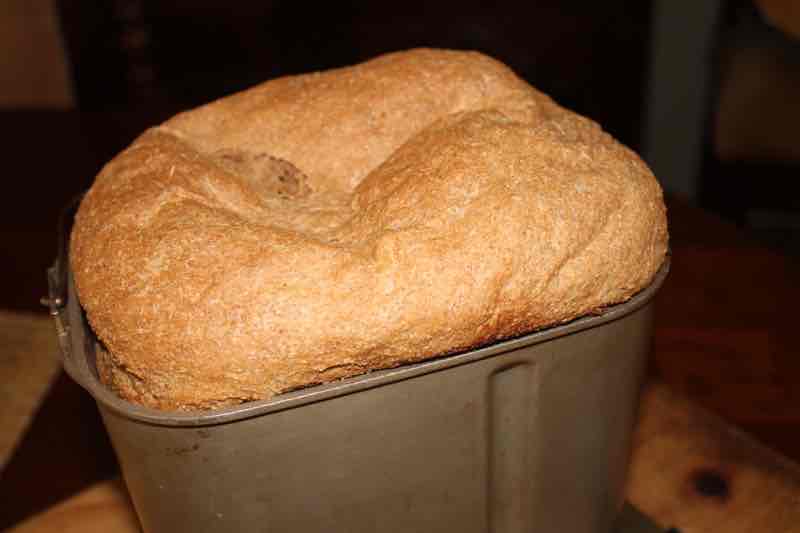 Sourdough bread baked with 100% real flour; unobtainable in shops.
If you bake daily then work on about 150kg per annum; you will find friends and family clamouring for your bread. Each loaf of sourdough will cost you under a dollar; just compare that with the retail price. It will motivate you to start winnowing grains at home.
Now we need to think about first sieving the grains at home; they will come with a lot of dust and dirt along with the chaff from the fields.
 Pick out the stubborn bits of chaff by hand
Sieves that will not let the grain through
 Sieve for the corn
First you will need some sieves that will let through a lot of that dust and dirt that will have been sucked up by the combine harvester. Perhaps the farmer will be able to do an initial winnow for you; it's worth asking.
Then you will need at least two 20 litre food-grade buckets; and some smaller ones.
Some folk recommend a fan; or you can just wait for a windy day.
Pour a few litres of the dirty grain into the sieve and then give it a good shake until the dust stops falling through. The chaff tends to collect in clusters and you can scoop some of the larger pieces off; give them to the chickens.
Pour the grain from one bucket to the other
 Winnowing corn in the breeze
Then fill one of the buckets with a few kilogrammes of wheat or corn, as much as you can easily lift on a windy day; raise as high as you can and slowly pour the grain into the other one.
Choose a day when the wind is not strong but also not too light; you'll soon figure it out.
The draft will blow the chaff away, allowing the heavy grains to fall into the other bucket. You will need to repeat this several times.
Accept that some of the chaff will remain in the wheat; it's simply a bit of extra fibre for the gut. You will not be able to see it in your slices of bread once it has been milled.
It takes perhaps half an hour to winnow enough of the grain at home for about 10 loaves of bread. Do it in stages for the whole 150kg of wheat; you have about six or eight weeks to finish the job before the weevils will start to appear.
Be aware of damp; aflatoxin is a nasty fungus. You may need to get the grain into the freezer a lot sooner if you have misty, wet weather.
Ready for the freezer
The grain must then be frozen for two weeks in air-tight buckets in a chest freezer to kill all the weevils and their eggs. Then it can be stored in a cool room quite safely for years.

So serious are some of the fungal diseases of damp grains that we advocate sealing the wheat doubly; first in heavy-duty plastic bags and then in airtight buckets. Four will fit neatly in a common sized deep freezer.
Ergot and Aflatoxin poisonings have devastated both humans and animals in the past; grains must be completely dry and stored in an air-tight environment after freezing.
Our maize is stored in the same way; though that for the hens without the plastic bags. We have had no troubles with the birds but for human consumption, we advocate going the extra mile; these fungi are deadly.
Maize also known as corn
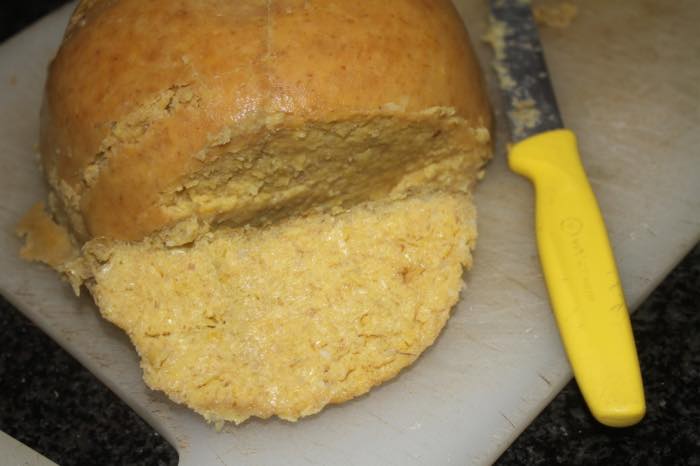 Cornbread made with true wholegrain
The size of maize kernels varies considerably so you will need different strainers. Conveniently the coarseness of this filter for wax cappings from honey comb is perfect for the yellow corn.
There's a synergy of hobbies. Being a beekeeper helps with winnowing grains at home; and the honey-room which is only used perhaps half a dozen times each year is perfect for storing the wheat and maize until the next crop is harvested.
 Sieve the corn before winnowing
Shake the sieve vigorously to let through small bits of chaff and broken kernels; they go to the hens.
The material expressed on this page is gleaned from the nutritional and environmental literature; it is clearly referenced. A plain distinction is made between the author's opinion and that which is scientifically proven. When in doubt consult your health professional.
To suggest a correction or clarification, write to Dr Bernard Preston here. Contact.
Winnowing grains at home
Winnowing grains at home is tedious but good exercise too. The big motivating factor is that true 100 percent real flour containing all the protective lignans and vitamin E is simply not to be found in the shops; if you fear dread disease then you simply make the time.
Wellness from true whole grains
Unlike that from the grocery store, raw honey has a low glycemic index; it even lowers the fasting blood glucose of diabetics. It enables you to give up sugar for ever.
The vitamin E only found in true unrefined wholegrain flour is nature's anticoagulant; prior to the commercial milling of wheat, heart attacks were almost unknown.
The beta-carotene that gives maize its yellow colour is the precursor of vitamin A; a deficiency causes half a million children to go blind every year[2].
All three of these are difficult to locate; you are unlikely to find them in grocery stores. Once processed they lose that goodness, have little taste and make us fat; and give carbs a bad name.
But unprocessed carbs are extremely healthy, providing large amounts of fibre for the gut, essential minerals and many vitamins; and they taste so good. But you are unlikely to find them in the grocery store. Start winnowing grains at home; and perhaps keep a few beehives in the garden.
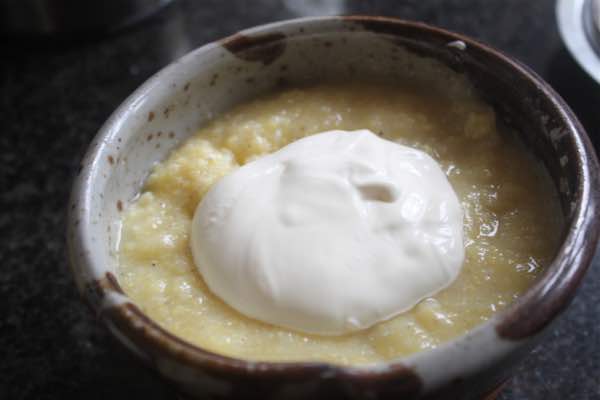
Grits made with true 100% wholemeal corn, known in Europe as polenta is incredibly tasty, cheap and filling; you won't be snacking at 11 o'clock. But to enjoy this real food you will have to be winnowing grains at home; and own a small stone mill. They can grind both maize and wheat.
Make sure you understand how "retrogradation" turns those carbs into resistant starch that will not make you obese; so many of us are now becoming insulin resistant. Large bowls of grits like that above, with added cream to help with absorption of the beta-carotene are only for those willing to go for a short brisk walk after breakfast.
This you can kiss the carbs-phobia that is seriously undermining our wellness goodbye for ever; true whole grains contain so many vitally important plant nutrients.
Profound influence on your health
Becoming a miller, winnowing your grains at home and then cooking them is truly profound; we give the true !00% meal that we adore daily, both corn and wheat, much of the credit for the fact that in our upper seventies we have no health issues, take no chronic medication and are going full-tilt at life.
Why is whole grain better is a question you may have been asking. Now you know the answer.
"It has been estimated that 20% of Medicare beneficiaries have five or more chronic conditions; and fifty percent are taking 5 plus drugs."
From the journals
When browsing use right click and "Open Link in New Tab" or you may get a bad gateway signal.
Newsletter
Our newsletter is entitled "create a cyan zone" at your home, preserving both yourself and Mother Earth for future generations; and the family too, of course. We promise not to spam you with daily emails promoting various products. You may get an occasional nudge to buy one of my books.
Here are the back issues.
- Lifestyle and ideal body weight
- What are ultra-processed foods?
- Investing in long-term health
- Diseases from plastic exposure
- Intensive lifestyle management for obesity has limited value
- A world largely devoid of Parkinson's Disease
- The impact of friendly bacteria in the tum on the prevention of cancer
- There's a hole in the bucket
- Everyone is talking about weight loss drugs
- Pull the sweet tooth
- If you suffer from heartburn plant a susu
- Refined maize meal and stunting
- Should agriculture and industry get priority for water and electricity?
- Nature is calling
- Mill your own flour
- Bake your own sourdough bread
- Microplastics from our water
- Alternative types of water storage
- Wear your clothes out
- Comfort foods
- Create a bee-friendly environment
- Go to bed slightly hungry
- Keep bees
- Blue zone folk are religious
- Reduce plastic waste
- Family is important
- What can go in compost?
- Grow broad beans for longevity
- Harvest and store sunshine
- Blue zone exercise
- Harvest and store your rainwater
- Create a cyan zone at your home
Did you find this page interesting? How about forwarding it to a friendly book or food junkie? Better still, a social media tick would help.
- Homepage
- Wheat bread
- Why is whole grain better?
- Winnowing Grains At Home
Address:
56 Groenekloof Rd,
Hilton, KZN
South Africa
Website:
https://www.bernard-preston.com