- Homepage
- What are legumes?
- How to plant broad beans
- How to Sprout Stake and Plant Broad Beans
How to sprout, stake and plant broad beans
How to sprout, stake and plant broad beans is the easy part; tying them securely has to be done weekly and they require large amounts of water in dry weather.
Broad beans are one of the most important vegetables grown in our garden; for the dopamine they provide, the complete protein and the large amount of fibre to help create a healthy environment for the friendly bugs in the gut.
It's not proven with humans yet but with rats bred to be vulnerable to Parkinson's Disease, the L-dopa in these legumes gives almost complete protection. Anyone with a tremor should be passionately interested in how to sprout, plant and stake broad beans.
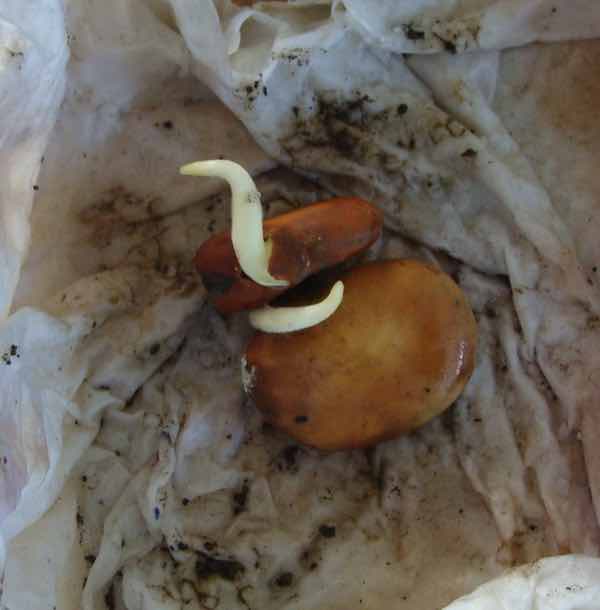

Sprouting broad beans
Sprouting broad beans is particularly easy. Soak them in water overnight, place them between two sheets of newspaper and keep them damp for a couple days. Add a couple teaspoons of the rhizobia specific for these legumes; it will double the yield.
It won't be long before a shoot appears.
Staking broad beans
Staking broad beans must be done before planting them. Some cultivars grow to over two metres tall.
Purchase treated poles at least 2m long and about 5cm thick at the base; preferably one bean seed for each, certainly no more than two.
Dig a hole about a spade wide at least 40cm deep; insert the pole trying to twist it in even further. It must be firm. Fill with compost and cover with a little soil.
Set the poles about a metre part; the plants grow very large and need plenty of light or they become prone to chocolate spot disease and other pests.

The material expressed on this page is gleaned from the nutritional and environmental literature; it is clearly referenced. A plain distinction is made between the author's opinion and that which is scientifically proven. When in doubt consult your health professional.
To suggest a correction or clarification, write to Dr Bernard Preston here. Contact.
Planting broad bean seeds
Now simply poke one or two divots close to the pole and insert the sprouting broad bean seeds; and cover with about an inch of soil.
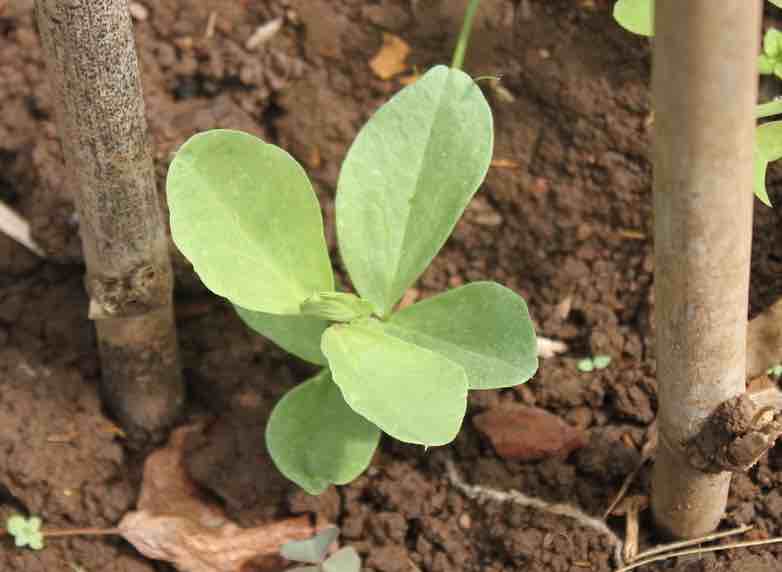 We used to use bamboo poles but they don't last.
Plant them in full sun.
Mulch the plants
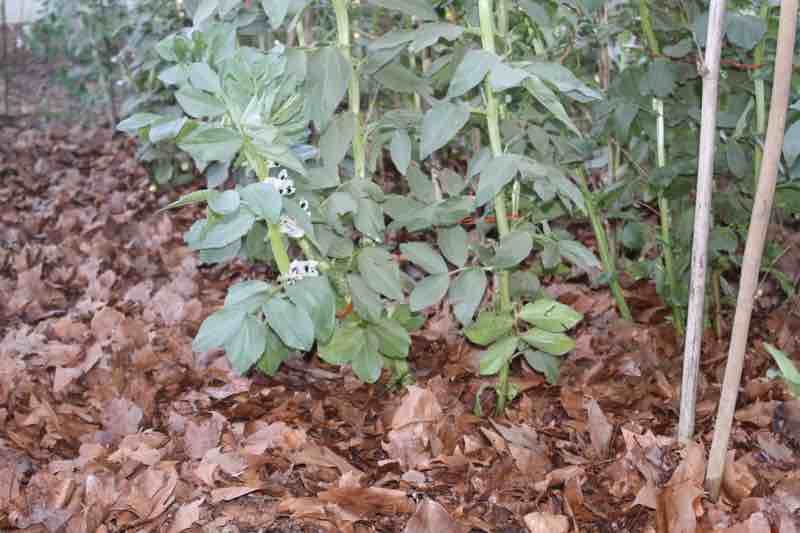 These urgently need tying; imminently they will snap off.
Broad beans require prodigious amounts of water in dry weather; they have a very shallow rooting system. Mulch them thoroughly with old leaves, mature compost or whatever is available; even sheets of cardboard.
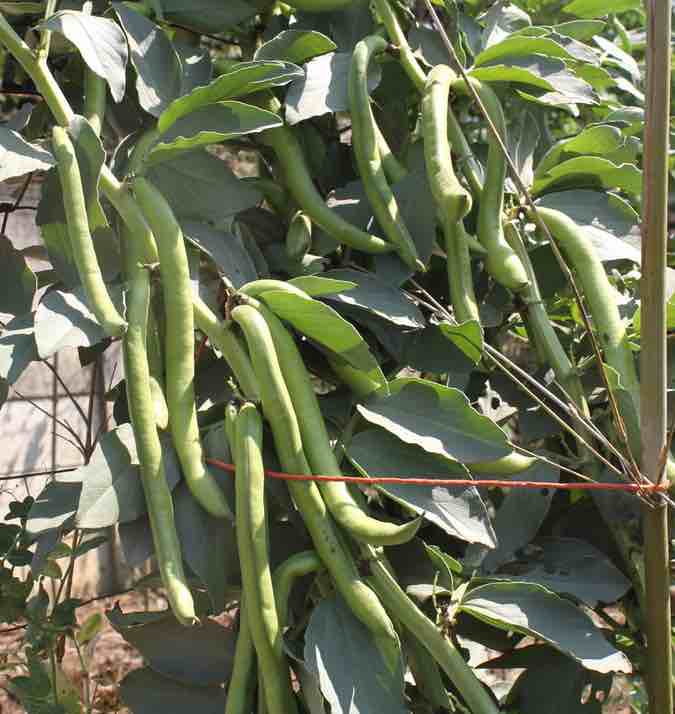 Note the supporting red twine.
Broad bean tips
That is the easy part of growing broad beans. Then the growing shoots have to be tied several times a week or they fall over and snap off; it's laborious but has to be done.
After ten years of growing broad beans I now use lengths of twine about a metre or more long even though in the beginning you will need only short pieces. Tie loose knots as you will be moving these supports up higher every few days; they grow incredibly fast.
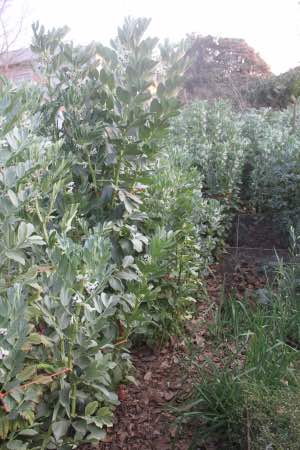
Patience is a virtue; they take a very long time to bear but then go on podding for months. You will be harvesting a mountain of food.
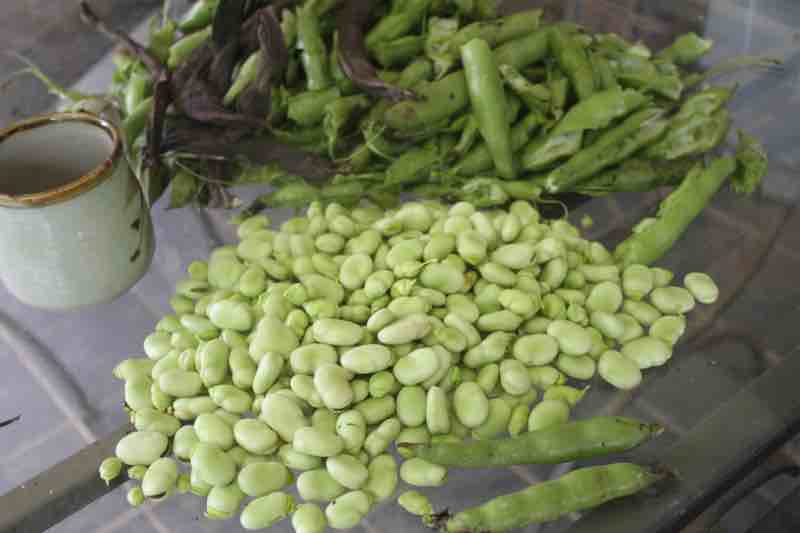
Enjoy them young and freshly-harvested
Like most vegetables broad beans are best eaten young and freshly-harvested. Old and starchy they are perfectly horrid; that's why they are so unpopular. An unpleasant taste from the tannins develops.
You can eat them in the pod when it's about the size of your middle finger; or wait until they are larger but then have to be shelled.
The young pods have even more L-dopa if you wanting them for the happy hormone; but less protein.
The larger beans have more protein but less L-dopa.
In Spain folk sit around in the evening and enjoy them as a snack with a glass of wine. Split the young pod open, harvest the small bean and dip it into olive oil. They are sweet and delicious; rather like green peas.
Once they get older they have little flavour and you will need to dicky them up with onions, peppers and garlic, for example.
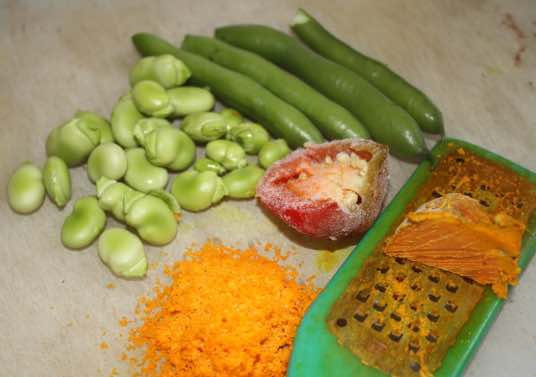
Below you can see how we enjoy our broad beans most often; our variation of Eggs Florentine. It makes a particularly nutritious, low-carb meal. Obviously there is some starch in the beans.
1 cup of beans contains about 33g of carbs, one-quarter of which is indigestible fibre, perfect for the friendly flora in the gut.
They are known as fava beans in Europe.
Never ruin fava beans by skinning them; a very bad practice which puts the GI into orbit. The microbiome needs that fibre; less than 5% of those enjoying typical grocery store food are consuming the required dietary allowance of about 35 grams each day. It comes as no surprise that the prevalence of colorectal cancer is growing in leaps and bounds.
Protection against serious disease
Knowing how to sprout, stake and plant broad beans will not only protect you from Parkinson's Disease but also bowel cancer and constipation[1].

Complete protein
There are reports that broad beans are the only legume that contains "complete" protein; all the essential amino acids.
There is about 8 grams of protein per 100g of the beans, a little more than half a cup; second only to soy.
How to sprout, stake and plant broad beans
How to sprout, stake and plant broad beans; it's not difficult but attention to detail is important. Tying and watering them in dry weather is what takes time. You may have to carry buckets from the shower.
From the journals
When browsing use right click and "Open Link in New Tab" or you may get a bad gateway signal.
Newsletter
Our newsletter is entitled "create a cyan zone" at your home, preserving both yourself and Mother Earth for future generations; and the family too, of course. We promise not to spam you with daily emails promoting various products. You may get an occasional nudge to buy one of my books.
Here are the back issues.
- Lifestyle and ideal body weight
- What are ultra-processed foods?
- Investing in long-term health
- Diseases from plastic exposure
- Intensive lifestyle management for obesity has limited value
- A world largely devoid of Parkinson's Disease
- The impact of friendly bacteria in the tum on the prevention of cancer
- There's a hole in the bucket
- Everyone is talking about weight loss drugs
- Pull the sweet tooth
- If you suffer from heartburn plant a susu
- Refined maize meal and stunting
- Should agriculture and industry get priority for water and electricity?
- Nature is calling
- Mill your own flour
- Bake your own sourdough bread
- Microplastics from our water
- Alternative types of water storage
- Wear your clothes out
- Comfort foods
- Create a bee-friendly environment
- Go to bed slightly hungry
- Keep bees
- Blue zone folk are religious
- Reduce plastic waste
- Family is important
- What can go in compost?
- Grow broad beans for longevity
- Harvest and store sunshine
- Blue zone exercise
- Harvest and store your rainwater
- Create a cyan zone at your home
Did you find this page interesting? How about forwarding it to a friendly book or food junkie? Better still, a social media tick would help.
- Homepage
- What are legumes?
- How to plant broad beans
- How to Sprout Stake and Plant Broad Beans
Address:
56 Groenekloof Rd,
Hilton, KZN
South Africa
Website:
https://www.bernard-preston.com