- Homepage
- What are legumes?
- How to plant broad beans
- The Best Way to Germinate Broad Bean Seeds
The best way to germinate broad bean seeds
The best way to germinate broad bean seeds requires consistent moisture, warmth and air; after three days they will begin to sprout. Only then plant them in prepared holes with a stout central stake.
Have an inoculant of rhizobia available at the beginning and if you can get it, some vermileachate from a worm farm; more about those later on this page.

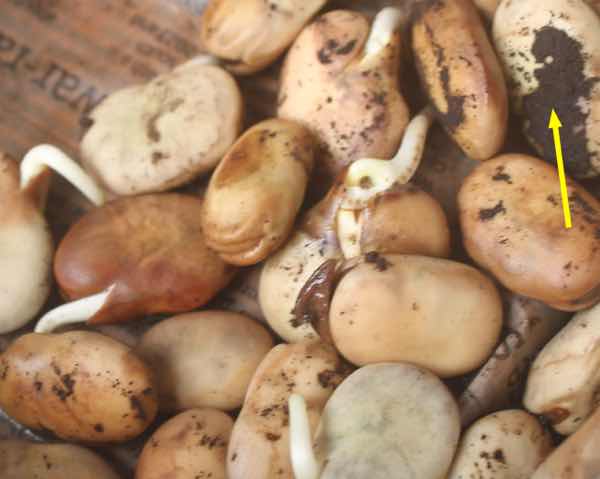 Broad bean seeds after 4 days; notice the black inoculant.
Quick guide
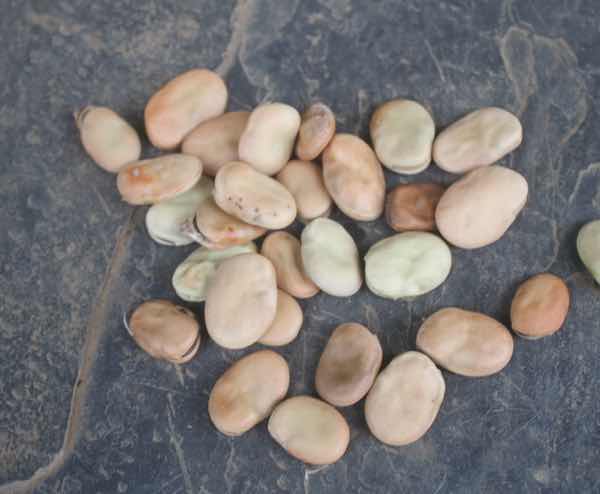
Why would you want to grow broad beans anyway?
- You are most unlikely to be able to purchase them; England, Europe and China excepted.
- If you do find them for sale they will most likely be old and harvested several days previously.
- They are the only source of L-dopa, the precursor of the "happy hormone." It also has proven benefits for the eyes.
- Consumption has been shown to help prevent Parkinson's Disease; only conclusively proved in mice to date.
- They are the only legume reported to have all the "essential" amino acids.
- Young and fresh they are delicious. Old they are stodgy and horrid.
Day 1: Soak overnight in unchlorinated water
Soaking the seeds overnight initiates the germination but don't leave them too long in the water because they also need warmth and air.
Bacteria called rhizobia grow on the roots; don't inhibit them with chlorine. Rainwater is best.
Day 2: Place the soaked seeds between sheets of paper
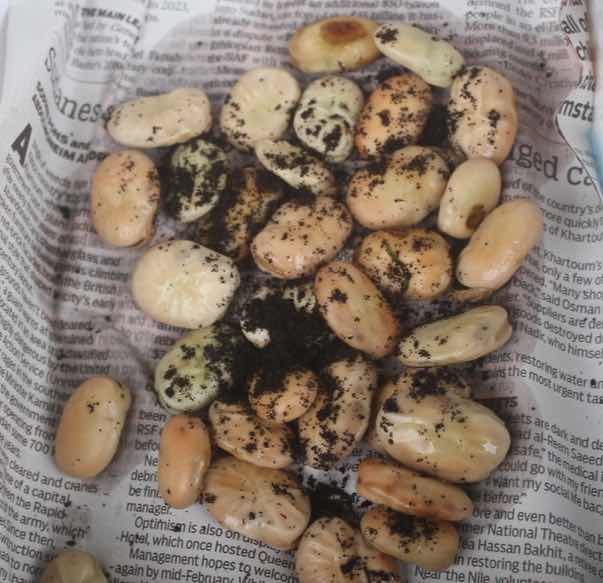
Place a sheet of newspaper at the bottom of a 2L ice cream container. Tip in the seeds that have been soaked overnight. Not essential but if you have available add some dilute "worm wee" to help with germination.
Now sprinkle the damp seeds with a little rhizobia powder.
Cover with another sheet of newspaper to keep it dark and humid; dampen with rainwater.
Place the lid of the container loosely in place to allow air to enter freely.
Day 3: Make sure the seeds are damp
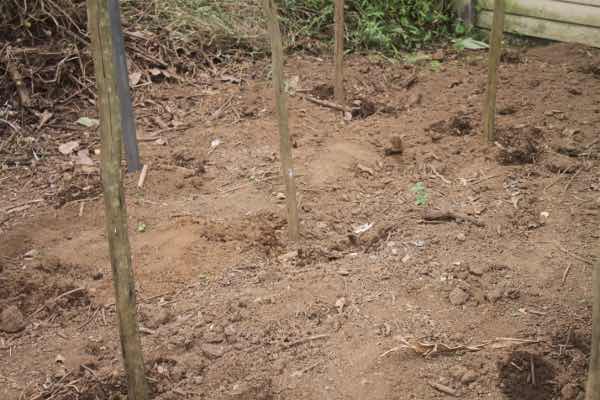 Poles roughly 1m apart; offset the second row for maximum sunlight.
There's nothing much to be done on day 3; time has to pass. Make sure the seeds and the newspaper are damp but not drowned. Pour off any excess water.
Today or tomorrow prepare the holes for planting; about a spade square and say 40cm deep. Align them in rows at least 1 metre apart; stagger them for maximum sunlight.
Plant the roughly 2.5m stake into the hole. Add some humus, vermicompost and wood ash if available; followed by at little topsoil. Compact everything so that the pole is steady.
Day 4: Look for signs of germination
If any young tendrils are forming you could plant the first seeds out today; or wait until tomorrow when they are a little stronger. Make a small hole about inch deep next to the pole, drop in those first sources of joy taking care not to damage the shoot. Lightly cover with soil.
You could put a seed on either side of the pole; then I would recommend spaces of more than a metre. The plants really do grow very large.
Planting before a rain shower is expected would be nice but unlikely so water the seeds in thoroughly. Keep them damp every day.
Day 5: Patience
A few days of patience are now needed; it won't be long. Keep the soil damp; a mulch of dry leaves will help.
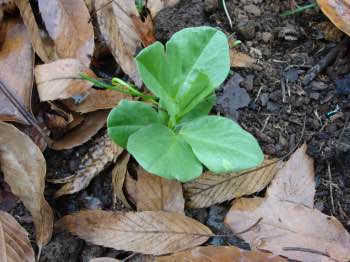
Rhizobia for broad beans
There is a wondrous symbiosis between bacteria called rhizobia and legumes that enables the latter to synthesise vast amounts of vegetable protein; these bugs can uniquely capture nitrogen from the atmosphere, essential for the manufacture of amino acids.
They are quite specific so you have to make sure you have the correct rhizobia; luckily it's the same bacterium as that which attaches to the roots of the common green pea.
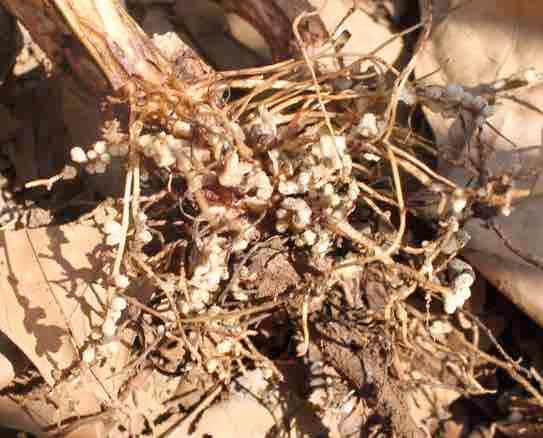 Pink rhizobia nodules on the roots of legumes enable them to capture atmospheric nitrogen
On a cool and cloudy day
The rhizobia bacteria are sensitive to sunlight. If you have spare inoculant over, you could tip it into a can, add water and stir; and then pour around the stem of the young plant once the roots are established.
Don't use a nitrogenous inorganic fertilizer if you are planning to use the inoculant; it will inhibit the bacteria.
They prefer a slightly alkaline soil. Sprinkling wood ash around the plant will also be beneficial.
Broad beans are a natural source of L-dopa
Parkinson's Disease is the fastest growing neurodegenerative disease on earth; solvents and other substances damage the nucleus in the brain that produces dopamine.
Broad beans are the only natural source of pharmaceutical amounts of L-dopa, the precursor of the hormone. On a personal note eaten daily they completely control the tremor in my right hand; hence my own fascination with these gems.
Also known as fava beans
You are most unlikely to find this wonderful source of food in cans; perhaps in Europe where they are known as fava beans.
The best way to germinate broad bean seeds
The best way to germinate broad bean seeds is between sheets of paper; newsprint is fine.
The material expressed on this page is gleaned from the nutritional and environmental literature; it is clearly referenced. A plain distinction is made between the author's opinion and that which is scientifically proven. When in doubt consult your health professional.
To suggest a correction or clarification, write to Dr Bernard Preston here. Contact.
When browsing use right click and "Open Link in New Tab" or you may get a bad gateway signal.
Newsletter
Our newsletter is entitled "create a cyan zone" at your home, preserving both yourself and Mother Earth for future generations; and the family too, of course. We promise not to spam you with daily emails promoting various products. You may get an occasional nudge to buy one of my books.
Here are the back issues.
- Lifestyle and ideal body weight
- What are ultra-processed foods?
- Investing in long-term health
- Diseases from plastic exposure
- Intensive lifestyle management for obesity has limited value
- A world largely devoid of Parkinson's Disease
- The impact of friendly bacteria in the tum on the prevention of cancer
- There's a hole in the bucket
- Everyone is talking about weight loss drugs
- Pull the sweet tooth
- If you suffer from heartburn plant a susu
- Refined maize meal and stunting
- Should agriculture and industry get priority for water and electricity?
- Nature is calling
- Mill your own flour
- Bake your own sourdough bread
- Microplastics from our water
- Alternative types of water storage
- Wear your clothes out
- Comfort foods
- Create a bee-friendly environment
- Go to bed slightly hungry
- Keep bees
- Blue zone folk are religious
- Reduce plastic waste
- Family is important
- What can go in compost?
- Grow broad beans for longevity
- Harvest and store sunshine
- Blue zone exercise
- Harvest and store your rainwater
- Create a cyan zone at your home
Did you find this page interesting? How about forwarding it to a friendly book or food junkie? Better still, a social media tick would help.
- Homepage
- What are legumes?
- How to plant broad beans
- The Best Way to Germinate Broad Bean Seeds
Address:
56 Groenekloof Rd,
Hilton, KZN
South Africa
Website:
https://www.bernard-preston.com