- Homepage
- What are legumes?
- Nutritional value of green beans
- Grow a Mountain of Legumes in Your Garden
Grow a mountain of legumes in your garden
Grow a mountain of legumes in your garden; it's time-consuming but not intrinsically difficult. Every extra 20g of peas, beans and lentils means an 8% lower all-cause of death.
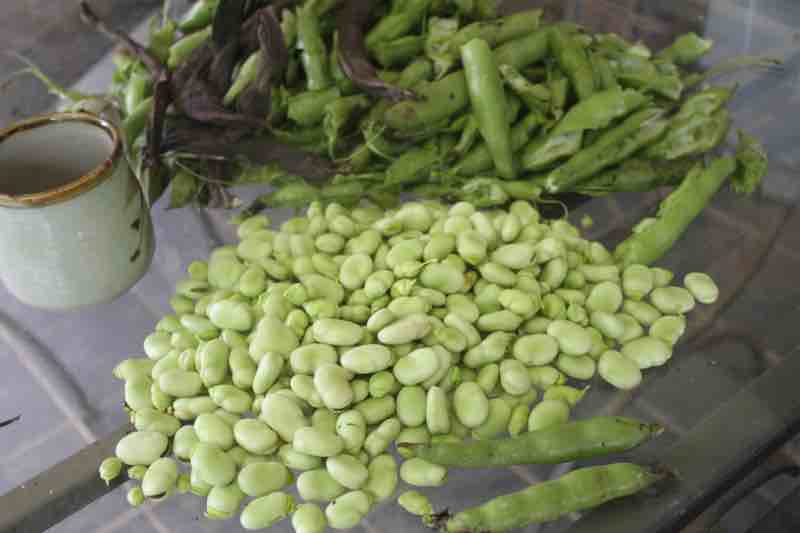 Broad beans from just two plants
Quick guide
Protein in legumes
Legumes are a cheap form of protein, albeit not a complete protein; they don’t have all the essential amino acids that our tissues absolutely demand to build strong minds and bodies. A deficiency causes stunting and, in its more severe form, Kwashiorkor.
They cost a fraction of the price of meat, dairy products and eggs; and arguably are more healthy though that is contested by the advocates of the ketogenic diets. Legumes have no cholesterol and most are low in fat; soy and peanuts are the exceptions.
Carbohydrate in legumes
Legumes are also a rich source of carbohydrate, much of it fibre that is locked up and only fermented rather than digested once it reaches the colon; what is known as “resistant starch.” There it is consumed by the multitude of bugs known collectively as the normal flora; the microbiome.
They in turn do not turn that carb into sugars, raising blood glucose but singularly important compounds known as short-chain fatty acids. In a separate essay we will discuss how to prepare probiotics in the home.
It is those carbs that make legumes controversial; the proponents of the ketogenic diets want us to keep peas and beans to a minimum or exclude them altogether.
This is not the place to argue the odds and truth be told, both sides are probably correct; it all depends on whatever else we are eating.
Types of legumes
Edible legumes can roughly be divided into two main groups; fruits and dry seeds.
- Fruits would include the common green beans and peas that we are all familiar with. They are easy to grow in the home garden.
- Dry seeds are divided into two:
- Pulses: the dried seeds of beans, peas and lentils, for example.
- Oil seeds: soy beans and peanuts.
Vitamins in legumes
Legumes are also a rich source of many vitamins, particularly those forming the B-complex. For example, chickpeas are the richest source of pyridoxine (B6) which is absolutely essential for the bone marrow to produce red blood cells; a deficiency causes one of the many forms of anaemia and the early onset of frailty syndrome.
Broad beans are particularly rich in folate and thiamine, two other important B vitamins.
Phytonutrients in legumes
Legumes also contain many bioactive compounds. Some play extremely important roles in reducing the risk of cancer, for example, whilst others such as lectins are viewed with some suspicion. Nevertheless the overall influence of compounds such as phytoestrogens and phenols in legumes is overwhelming positive.
Researchers publishing in Environ Health Prev Med. state that legumes, and other foods in the Mediterranean diet significantly reduce the risk of breast cancer, for example[1].
Blue Zones and broad beans
In all five Blue Zones of the world, completely independently, it is often commented upon that the people grow and consume broad beans[2]. They are known for being one of very few sources of an important bio-active compound known as L dopa.
It is the precursor of dopamine, a profoundly vital neurotransmitter in humans. A deficiency causes neurodegenerative conditions such as Parkinson’s disease.
25% of broad beans consists of protein.
Anti-nutrients like phytates
There is a growing belief that certain substances found in legumes and whole grains in particular, collectively known as anti-nutrients, are particularly bad for us. The lectins mentioned above would be one, as are phytates. What is certain is that they do to an extent inhibit the absorption of minerals from our food. Perhaps in a separate essay we will consider this important matter.
What is important for the home gardener, is that the fruit legumes, green beans and peas, have far less of the anti-nutrients that some believe are particularly noxious, causing leaky bowel syndrome and other conditions. Soybeans have the highest content, nearly 100x more than green peas, for example, this perhaps being the reason that many find them indigestible unless fermented.
Vegans and legumes
Vegans who eat absolutely no food from an animal source, no meat, fish or fowl, and no dairy products, thinking they can get all their protein from legumes, run the serious risk of being deficient in certain “essential” amino acids.
Yet as we all know, vegans can be perfectly healthy, in fact typically living about 10% longer than those who eat meat. They get these missing amino acids typically from two sources.
- Corn and beans.
- Seeds and legumes
Traditionally in South Africa, stamp mealies and dried beans form the basic source of protein for many rural people. In America, succotash is a popular dish.
In the Mediterranean region, hummus, a mixture of chickpeas and finely-ground sesame seeds, known as tahini, will provide all the essential amino acids[3].
Those vegans who simply drop all animal products from the Western diet without compensating for these missing essential amino acids run a great risk of becoming deficient. A vitamin B12 deficiency is another common problem faced by vegans.
The material expressed on this page is gleaned from the nutritional and environmental literature; it is clearly referenced. A plain distinction is made between the author's opinion and that which is scientifically proven. When in doubt consult your health professional.
To suggest a correction or clarification, write to Dr Bernard Preston here. Contact.
Grow a mountain of legumes in your garden
Grow a mountain of legumes in your garden; much vegetable protein. Save a lot of money and protect yourself against many serious diseases.
For the purpose of this essay we will focus on four legumes that can be readily grown in the home garden. All four belong to the “fruit legumes” group. They are tastier, easier to grow, quicker to cook and avoid the anti-nutrient issue.
As an aside legumes are also popular with organic gardeners because they capture nitrogen from the air and enrich the soil, lessening the need for inorganic fertilisers.
The Big Idea
No one with a small piece of ground need be short on cheap protein. Grow a mountain of legumes in your garden to feed the growing family.
Garden trellis for climbing legumes
A trellis of sorts needs to be built for the climbing varieties; this has the advantage over a fence since a trellis can be moved every year for rotational planting. That means better harvests and less disease and pests. Bamboo poles forced deep into the earth after a rain when the ground is soft is recommended; even dig small holes first about a metre apart. It needs to be sturdy.
Green beans
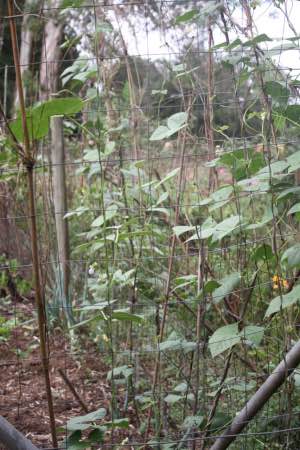
The common green bean, pole bean, string bean needs little introduction; we are all familiar with it. It should form the mainstay of protein-rich legumes from the summer garden. Plant in spring once the danger of frost is over. Dwarf beans will bear in about two months, climbing beans need a trellis and take longer to bear, but are far more prolific and easier to reap. It makes sense to plant both in early spring.
The heirloom Witsa is a great favourite with many, some of the pods being allowed to mature, ripen and provide seed for the next season. The other great advantage is that the pod is completely edible if harvested young, and enjoyed freshly-picked.
Repeated plantings will mean that green beans can be enjoyed from October until March and even April; six months of the year.
Stinkbugs and the Mexican bean beetle can be problematic; these curses can be almost completely obviated by planting these climbing beans with other pole beans like limas.
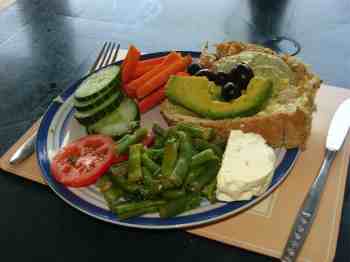 A green bean salad like this ticks so many boxes
Grow a mountain of legumes in your garden so that you too can have plenty of good food every day.
Lima beans
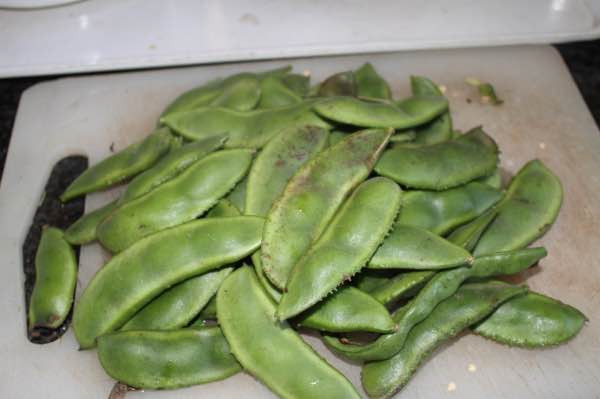
Lima beans are not commonly grown in South Africa perhaps because the maroon-speckled variety is the most common cultivar and it is rather starchy. Canned they are known as butter beans. They come from Peru, hence the name.
Green lima beans such as the heirloom Fordhook are far more tender than their maroon cousins, and slightly sweetish.
Pole lima beans form an extremely prolific foliage and need to be grown on a firmly anchored trellis. The weight of the vines, leaves and pods is significant, sometimes breaking the support structure or being blown over in a strong wind.
Lima beans continue bearing and can be reaped well into winter providing a protein-rich food from December until June and even longer. They appear to be largely free of disease; grown with the common climbing bean they provide protection from insectivorous pests.
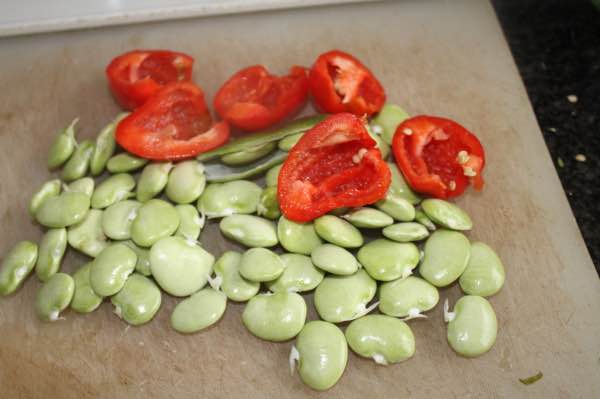
Grow a mountain of legumes in your garden; tasty, nutritious and cheap.
"Growing your own food is like printing your own money."
- Ron Finley
Broad beans
When you grow a mountain of legumes in your garden you will want to start experimenting cooking them with spices, onions and peppers; they are so versatile.
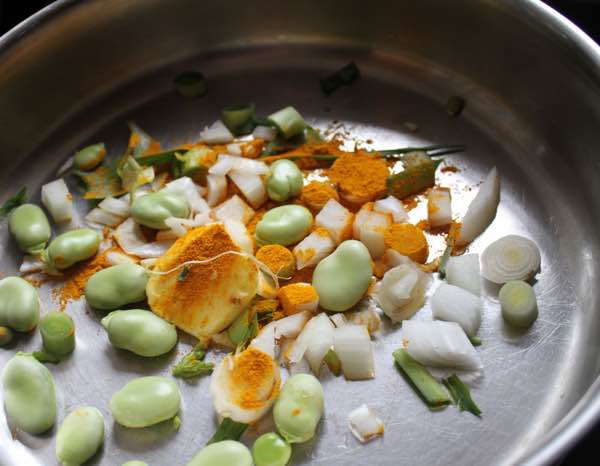 Broad beans with onion and turmeric
The broad bean gets very bad press and you are mostly unlikely to find it anywhere for sale, except in some parts of the UK, Morocco and the five Blue Zones mentioned above where ten times as many people live into vigorous, strong old age. Occasionally you may spy them at some Farmers’ Markets.
There are four reasons why this may be so. Firstly, unless picked young and enjoyed freshly-harvested they are perfectly horrid; starchy and unpleasant. And secondly they are rather more difficult to grow; they have to be firmly staked and, because they grow so fast and bear prolifically, they constantly need to be tied and supported. Once they fall over, heavy in fruit, the stems break and die.
Thirdly they are prone to an insect called “black fly” and a mould that cannot be treated in the organic garden; only rotational planting helps alleviate it. The black fly can easily be rubbed off the flowers and stems with a stream of running water; that is an imperative.
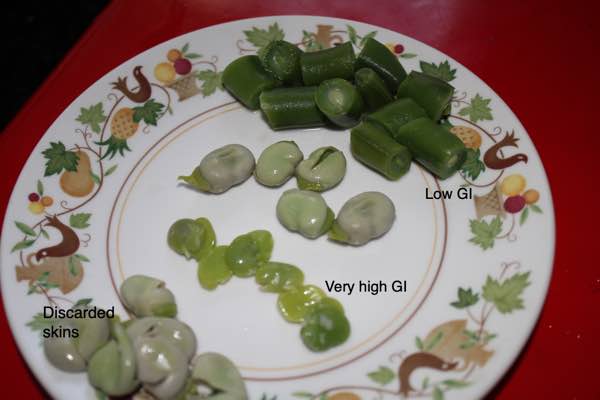
Fourthly it would appear they have a high glycemic-index; that would seriously increase blood-glucose raising all the red flags. That however is because they are commonly double-podded; not only is the seed removed from the shell but the outer skin of the bean is also removed.
Those growing them in their own gardens would certainly not do that; most of the beans are enjoyed in their young pods, neither shell being removed; they are also a rich source of fibre enjoyed this way, with a low GI like all other unprocessed legumes.
In short, broad beans take more time and effort. Yet, for those who know them and grow them in their own gardens, they are the queen of the legumes; easily digestible, rich in protein and the only common source of L-dopa. There are good reasons why those living in the Blue Zones grow their own broad beans and live into strong and vigorous nineties.
Interestingly that L-dopa is found not only in the beans but also in the young shoots which can be enjoyed as a green, and even more in the pods themselves.
Place the beans in wet newspaper for a couple days before planting; until they start to sprout. They are best planted in late summer so that they will grow through the winter. A second sowing in spring is also possible but once the heat sets in they are less prolific. They too can be enjoyed for six months of the year with a careful planting regimen.
Green peas
Green peas too need little introduction. They have the advantage of being lowest in “anti-nutrients” which is perhaps why they are probably the favourite legume in many households. Peas also have the advantage over beans of being more frost-resistant. They can be planted in spring, but also in late summer, bearing right through mild winters.
Shelling peas may be a “bridge too far” for some families, but freshly-harvested green peas straight from the garden are without equal.
There are some climbing varieties that can be eaten without podding in a salad; Sugar-Snap is our favourite.
"For every 20 grams increase in daily legumes intake there was an 8% reduction in the risk of death."
- NDSU: Food and Nutrition
Best way to cook lentils
Lentils are probably the easiest of the legumes to cook; being so tiny they do not need to be soaked; along with chickpeas they are the world's favourite vegetable protein source.
- Best way to cook lentils
Chickpeas are the most favoured legume
Chickpeas are an amazingly cheap source of protein; it is little wonder that it has the accolade for the world's most popular legume. They are not worth growing in your garden as they have only one seed in the pod making them very labour intensive.
They are usually made into hummus and falafel; and added as a filler to many dishes.
From a can they are four times the price; we recommend soaking and pressure cooking them. Freeze them in small packets for convenience.
Parkinson's Disease and broad beans
Parkinson’s disease is the second most common neurodegenerative condition. Dopamine is normally produced in both a nucleus called the Substantia Nigra and in the lining of the healthy gut which is now being called the “second brain.”
Both the normal flora living in the intestine and cells in the lining of the colon itself produce a rich and diverse number of bioactive compounds, of which one is dopamine. Exposure to unknown toxic chemicals or viruses are thought to target and destroy these cells causing these diseases.
Whilst there appears to be no research that humans eating broad beans gives protection against Parkinson’s disease, clinicians have found that eaten daily they provide far better relief from the symptoms of the condition than levodopa drugs. This needs to managed with care as taking the medication and eating broad beans can cause a serious overdose and increase dyskinesias.
Grow a mountain of legumes in your garden for better health.
SUMMARY
- Green legumes are easy to grow year round in the home garden.
- Legumes are a good source of dietary protein, resistant starch and many bioactive compounds.
There is absolutely no reason why there should be the acute shortage of protein in the diet of South Africans, and in particular their children. Growing green legumes in the garden is not rocket-science; coupled with a glass of milk and a couple eggs a week, we and our children can readily get all the protein we need.
With great financial hardship and acute hunger facing the world, and even another Great Depression lurking, it behooves every single family to grow food in their own home garden. Green beans and limas in summer, broad beans and peas through the winter with some overlap; it is possible to enjoy a mountain of legumes from any size garden year round with careful planning.
In any case, for those who love their food, fresh from the garden they taste so much better.
From the journals
When browsing use right click and "Open Link in New Tab" or you may get a bad gateway signal.
Newsletter
Our newsletter is entitled "create a cyan zone" at your home, preserving both yourself and Mother Earth for future generations; and the family too, of course. We promise not to spam you with daily emails promoting various products. You may get an occasional nudge to buy one of my books.
Here are the back issues.
- Lifestyle and ideal body weight
- What are ultra-processed foods?
- Investing in long-term health
- Diseases from plastic exposure
- Intensive lifestyle management for obesity has limited value
- A world largely devoid of Parkinson's Disease
- The impact of friendly bacteria in the tum on the prevention of cancer
- There's a hole in the bucket
- Everyone is talking about weight loss drugs
- Pull the sweet tooth
- If you suffer from heartburn plant a susu
- Refined maize meal and stunting
- Should agriculture and industry get priority for water and electricity?
- Nature is calling
- Mill your own flour
- Bake your own sourdough bread
- Microplastics from our water
- Alternative types of water storage
- Wear your clothes out
- Comfort foods
- Create a bee-friendly environment
- Go to bed slightly hungry
- Keep bees
- Blue zone folk are religious
- Reduce plastic waste
- Family is important
- What can go in compost?
- Grow broad beans for longevity
- Harvest and store sunshine
- Blue zone exercise
- Harvest and store your rainwater
- Create a cyan zone at your home
Did you find this page interesting? How about forwarding it to a friendly book or food junkie? Better still, a social media tick would help.
- Homepage
- What are legumes?
- Nutritional value of green beans
- Grow a Mountain of Legumes in Your Garden
Address:
56 Groenekloof Rd,
Hilton, KZN
South Africa
Website:
https://www.bernard-preston.com