- Homepage
- Eco-friendly homes
- How to start beekeeping
- Can I Keep a Beehive At Home
Can I keep a beehive at home?
Can I keep a beehive at home? Do they sting, is it dangerous and what should I look out for?
It's as well to remember that bees can be aggressive and dangerous. The European specie that is found in North America, Australia and New Zealand as well is relatively tame but given the wrong stimulus may come out in force and attack anyone in the vicinity.
The African bee is particularly dangerous; it should always be assumed that they will attack in force if disturbed.
So if you want to keep a beehive at home start by looking for a secluded corner where inquisitive children won't be tempted to throw stones, the neighbours will not be stung when mowing the grass and your own family will be safe.
Several hives in the home garden is called an apiary.
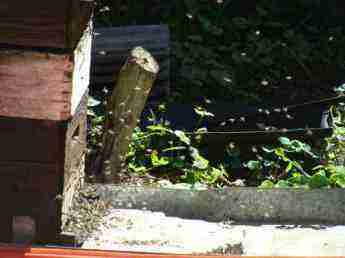

Quick guide
More detail
- Who will save the bees?
- Beginners' beekeeping day
- Moving beehives
- No detrimental effects of delayed mowing
- Carpet South Africa with Spekboom
- African dogwood tree for bees
- Plant indigenous trees for bees
- What can I harvest honey
- Modus operandi harvesting honey
First talk to the neighbours
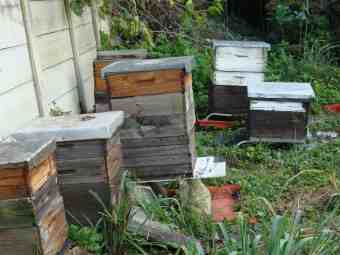 The apiary
If you want to keep one or more beehives at home, it's always a good idea to start with the neighbours; same as if you are planning on purchasing a pit bull. Remember that unlike a dog they can and will fly over the fence.
The promise of a few bottles of prime honey and that you will warn them when you are planning on opening the hives. Better still, ask if they will be away for a day or two; that is the time to harvest the honey or do maintenance work in the broodchamber which often will get them excited.
Placing the apiary behind a concrete wall or thick hedge is ideal; think of both your own family, the neighbours and passersby on the street.
The next step is to attend a beginners' beekeeping day; talk to some old timers.
Bees hate strange smells
What really gets bees excited is strange smells; mowing the grass, turning the sod and even perfume can rile them. So if your neighbour has a vegetable garden or patch of lawn just over your common boundary fence, that's not a good place for your apiary.
Look up the municipal laws
There will likely be some municipal laws; how many hives you can keep, how far from your boundary fence they must be and so on.
Agricultural land honey
Honey from out in the country is more likely to be polluted with ecocides than that from towns and villages. So there are more people asking, can I keep a beehive at home? Apartment rooftops and even balconies may be sporting a few colonies these days.
Catching your first colony
It's a good idea to use an old hive that smells of bees for catching your first colony; get it from an established keeper during a honey flow when they are more likely to be swarming.
Place the box off the ground on a water tank or perhaps a tree stump; a metre or two off the ground.
You could buy a hive with bees of course.
It's best to lure swarming bees from a property more than 2km away; then you can move the new colony directly to your apiary. Otherwise it means relocating the hive twice.
Moving beehives
Moving a strong beehive is difficult but a newbie is usually straightforward; it is not heavy and there are not a great many defenders. Nevertheless take care; there's many a slip twixt cup and lip.
And there are few beekeepers who have not had a slipped disc; the hives are awkwardly shaped for lifting by one person and usually very heavy.
Delayed mowing
There is increased evidence of the importance of indigenous weeds to bees; they are a prime source of sustaining nectar and pollen during a dearth.
Who will save the bees? It's the responsibility of each and every person wanting to eat of the plants they pollinate, of course.
Bees particularly dislike the smells associated with mowing grass in the vicinity of the hives; full protection and a belching smoker.
There are usually no detrimental effects of delayed mowing. Whether a keeper or not it's a good idea for the environment to start some bee-friendly plants. A double win would be to try and carpet South Africa with Spekboom; it's an excellent carbon sink and provides plenty of very special nectar.
The African dogwood tree for bees would be of interest mainly for those into fermenting honey; the twigs are used for brewing indigenous beer.
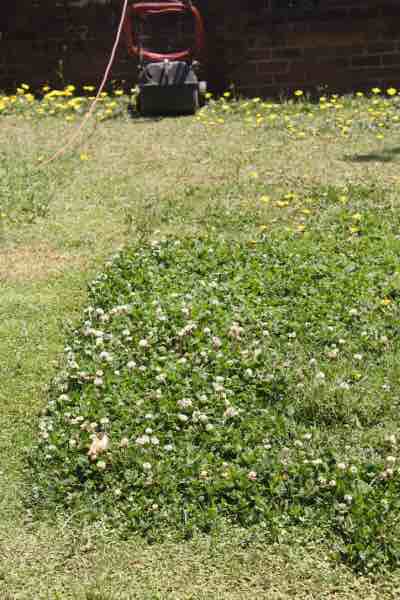 Delayed mowing of clover and daisies.
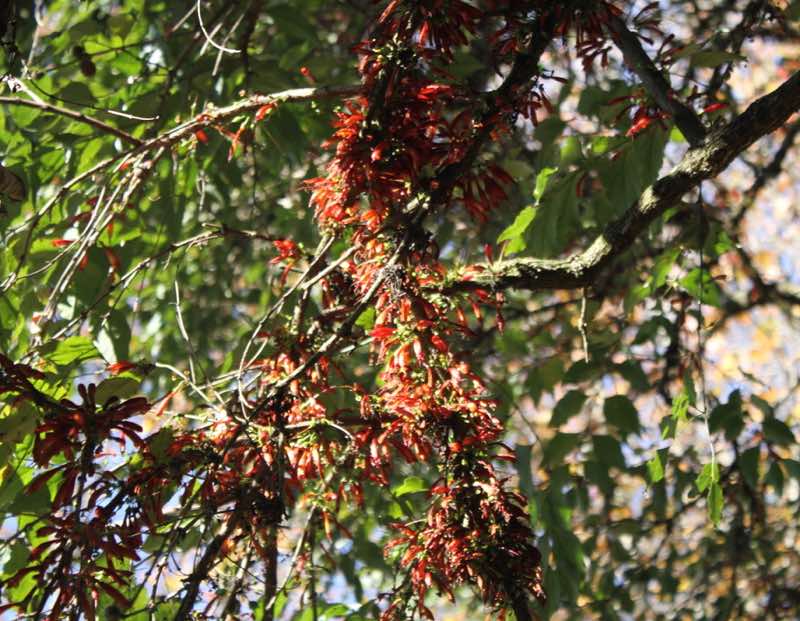
Another winner is the Halleria Lucida; a beautiful small indigenous tree for every garden with bright red flowers that the bees adore.
Planting indigenous trees for bees is for all; remember that one in four mouthfuls of our food is dependent on them for pollination.
The material expressed on this page is gleaned from the nutritional and environmental literature; it is clearly referenced. A plain distinction is made between the author's opinion and that which is scientifically proven. When in doubt consult your health professional.
To suggest a correction or clarification, write to Dr Bernard Preston here. Contact.
Can I keep a beehive at home?
Strong colonies sustained by flowering weeds will be ready for action when the next honey flow starts.
By all means keep a beehive at home; apart from the joy of your own honey there is increased pollination and greater harvests of all your fruit and vegetables.
Almost all commercial honey has been detrimentally processed these days and it's estimated that more than a half of that on grocery store shelves has been adulterated; often with nasty high fructose corn syrup that causes insulin-resistance.
There are several different modus operandi of harvesting the honey.
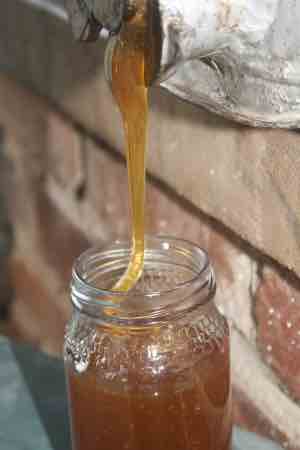 What a joy this is
When can I harvest honey is often one of the first questions that a new beekeeper will ask; it raises several issues.
For reasons not well understood most honeys from small beekeepers have a low glycemic index[2]; they are not fattening and even lower the morning fasting blood glucose. Perhaps it's because of the pollen that is so important for our wellness but also being high in protein and fat reduces the GI.
From the journals
When browsing use right click and "Open Link in New Tab" or you may get a bad gateway signal.
Newsletter
Our newsletter is entitled "create a cyan zone" at your home, preserving both yourself and Mother Earth for future generations; and the family too, of course. We promise not to spam you with daily emails promoting various products. You may get an occasional nudge to buy one of my books.
Here are the back issues.
- Lifestyle and ideal body weight
- What are ultra-processed foods?
- Investing in long-term health
- Diseases from plastic exposure
- Intensive lifestyle management for obesity has limited value
- A world largely devoid of Parkinson's Disease
- The impact of friendly bacteria in the tum on the prevention of cancer
- There's a hole in the bucket
- Everyone is talking about weight loss drugs
- Pull the sweet tooth
- If you suffer from heartburn plant a susu
- Refined maize meal and stunting
- Should agriculture and industry get priority for water and electricity?
- Nature is calling
- Mill your own flour
- Bake your own sourdough bread
- Microplastics from our water
- Alternative types of water storage
- Wear your clothes out
- Comfort foods
- Create a bee-friendly environment
- Go to bed slightly hungry
- Keep bees
- Blue zone folk are religious
- Reduce plastic waste
- Family is important
- What can go in compost?
- Grow broad beans for longevity
- Harvest and store sunshine
- Blue zone exercise
- Harvest and store your rainwater
- Create a cyan zone at your home
Did you find this page interesting? How about forwarding it to a friendly book or food junkie? Better still, a social media tick would help.
- Homepage
- Eco-friendly homes
- How to start beekeeping
- Can I Keep a Beehive At Home
Address:
56 Groenekloof Rd,
Hilton, KZN
South Africa
Website:
https://www.bernard-preston.com