- Homepage
- What are legumes?
- The best way to eat broad beans
- Enjoy Whole Foods
Enjoy whole foods
Enjoy whole foods is about how we can ruin fava beans, real bread and brown rice.
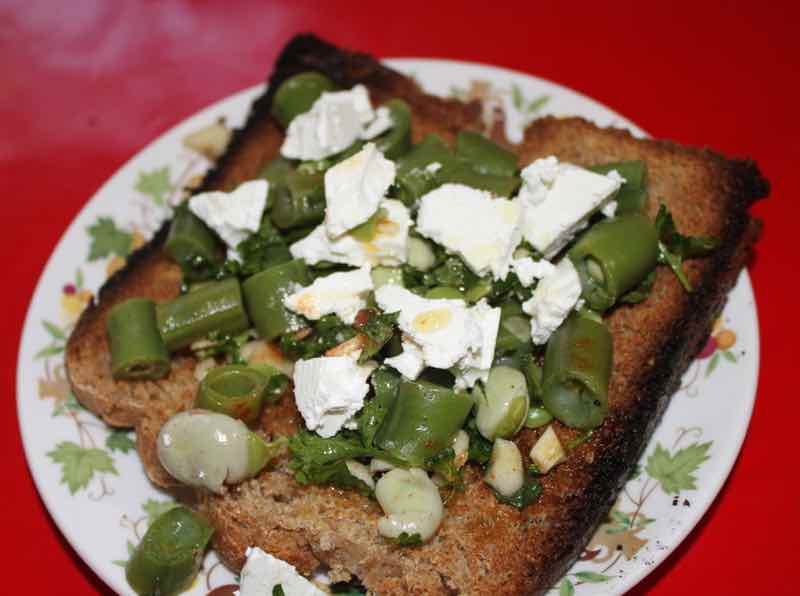

Favas, also known as broad beans
Anyone who reads this column with any regularity will know that I am totally enamored by broad beans. Thus I was delighted when I saw that Dr Weil, had written up a recipe for a Fava Bruschetta[1]. He is definitely someone to follow but like Bernard Preston with a just a touch of skepticism.
In this instance Dr Weil takes what is basically broad-beans on toast, gives it a fancy Italian name, and then proceeds to utterly desecrate what is in actual fact a very fine whole food.
First he recommends you shell the beans and then pop them out of their skins. It effectively removes almost all of the fibre and is the reason why contrary to all other legumes, favas are reckoned to have a very high glycemic-index; doubly refined in this way they certainly do.
Then he instructs the cook to grill the bread in the oven; what’s the matter with the toaster, requiring a fraction of the electricity and taking perhaps a tenth of the time?
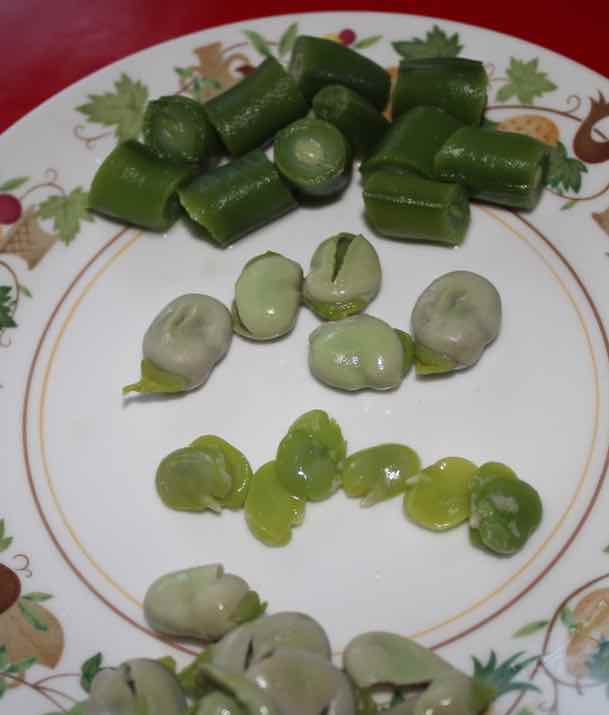 Whole broad beans; shelled, skinned and the fibre discarded.
Finally cut some garlic in half and rub the toast, the inference being that you then discard the clove.
He has taken a simple and nutritious dish that can be prepared in fifteen minutes, robbed it of much of its nutrients and made it far more difficult and time-consuming to prepare; enough to put anyone off, so I rewrote the recipe as broad beans on toast, which is a wonderfully nutritious and tasty dish.
Finding 100% flour for the toast under your broad-beans is more difficult. You must have a wheat mill to make your artisan bread; it is truly a whole food which is almost impossible to buy. You have to grind the meal yourself; you simply won't find it on the shelf of your supermarket.
Green mealie and brown rice risotto
And then there’s America’s test-kitchen, another site with many good ideas; their column titled 10 good things to know about green mealies is superb but they utterly ruin the newsletter with their Corn Risotto.
They recommend making it with white rice and corn from which they have extracted the puree and discarded the solids. In short both the rice and the corn are now ultra-refined starches with a glycemic index that will push your blood glucose into orbit if you are the slightest bit insulin resistant; nearly a half of those enjoying typical grocery store food. It will be very fattening.
Again I rewrote the recipe, calling it green-mealie risotto, using brown rice and all the fibre in the corn; it makes a very fine and nutritious dish. There is heaps of research stating how beneficial whole grains are but most recipes for risotto are akin to eating white bread.
It seems to my cynical mind that even top chefs love to take a simple dish, extract and then discard half the goodness; and then make it difficult to prepare. It’s little wonder that so many eating typical grocery store food are so obese.
And so are we in South Africa, not because of bruchettas and risottos but largely owing to sugary colas, chocolate cake and "koeksusters;" and refined maizemeal too. It is no coincidence that the USA and SA rank in the top five nations where the C-19 virus wracked such havoc.
Enjoy whole foods
Enjoy whole foods because they provide the fibre our colons must have; and the nutrients that our cells demand if we are to enjoy long and vigorous lives.
L-dopa in fava beans
Broad beans are a unique vegetable because they are the only natural source of pharmaceutical amounts of the precursor of dopamine. That is the neurotransmitter missing in people suffering from Parkinson's disease[2].
More than half of the L-dopa is found in the pod. Dr Weil's recipe discards most of the real virtue of this wonderful bean.
Gout
A researcher has found that a plant-based whole food diet lowered the Visual Analogue Scale of those suffering from gout by a whole 2 points. That could be from severe to moderate; or mild to no pain at all. There was also a substantial improvement in other parameters such as BMI and LDL levels.
Interestingly there was very little change in the uric acid levels; but no dairy, meat or eggs were allowed. It also included a low fat regimen.
Whilst many of the participants did not find the regimen sustainable they generally ate considerably less red meat after the trial and found it easier than expected to keep on with a largely whole food, plant-based diet.
Conversely those who have taken to one of the ketogenic diets, usually high in animal protein frequently need treatment for severe bouts of gout.
The material expressed on this page is gleaned from the nutritional and environmental literature; it is clearly referenced. A plain distinction is made between the author's opinion and that which is scientifically proven. When in doubt consult your health professional.
To suggest a correction or clarification, write to Dr Bernard Preston here. Contact.
True wholemeal bread
Real bread contains all the vitamins, minerals and fatty acids of the whole-grain; there is no separation of the three streams of bran, germ and endosperm.
However millers are allowed by international law to remove forty-percent of the goodies and still label it as "wholemeal." It's a big fat lie.
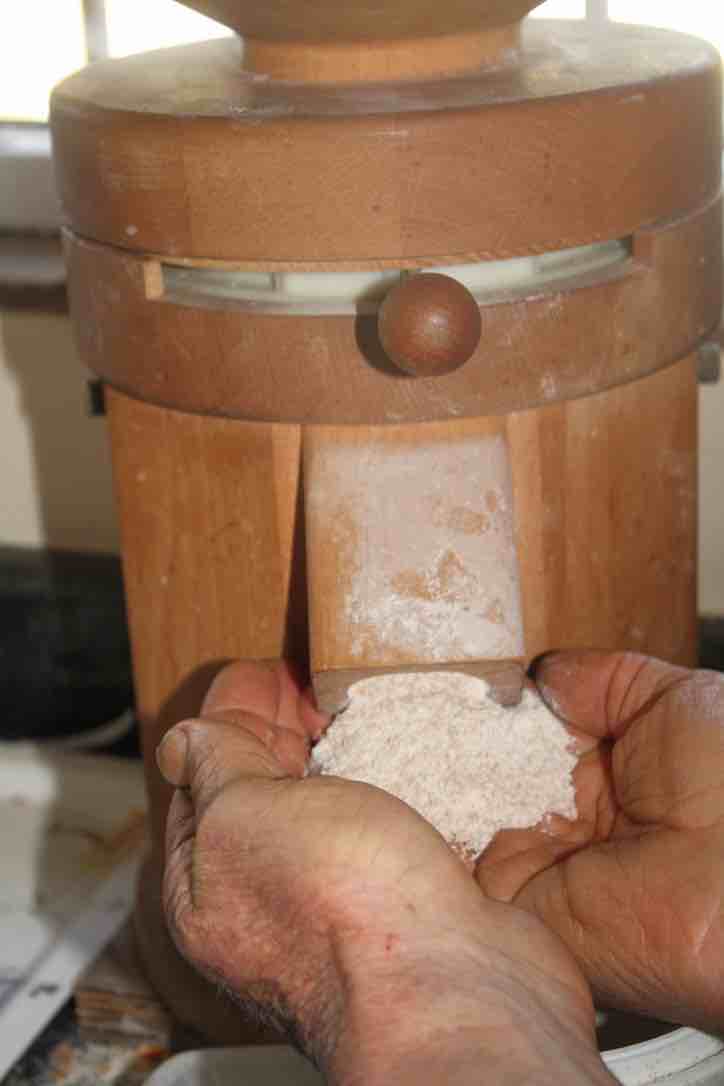
This meal is quite different to anything you can buy. And the bread made from it unbelievably wholesome and tasty. Having enjoyed artisan bread you'll never go back to the commercial loaf.
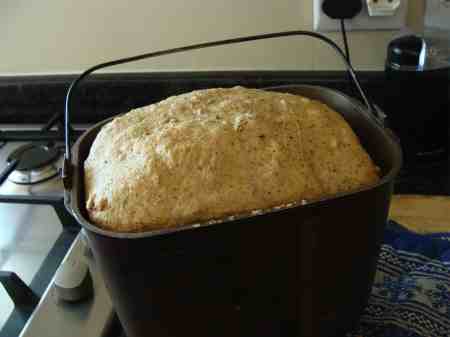
Enjoy whole foods and there's a good chance you will live long in the land.
Lignans and cancer
Enjoying true whole foods especially grains and legumes means a plentiful supply of important phytonutrients called lignans that give very significant protection against cancer, particularly of the breast and prostate; two of the leading killers.
From the journals
When browsing use right click and "Open Link in New Tab" or you may get a bad gateway signal.
Newsletter
Our newsletter is entitled "create a cyan zone" at your home, preserving both yourself and Mother Earth for future generations; and the family too, of course. We promise not to spam you with daily emails promoting various products. You may get an occasional nudge to buy one of my books.
Here are the back issues.
- Lifestyle and ideal body weight
- What are ultra-processed foods?
- Investing in long-term health
- Diseases from plastic exposure
- Intensive lifestyle management for obesity has limited value
- A world largely devoid of Parkinson's Disease
- The impact of friendly bacteria in the tum on the prevention of cancer
- There's a hole in the bucket
- Everyone is talking about weight loss drugs
- Pull the sweet tooth
- If you suffer from heartburn plant a susu
- Refined maize meal and stunting
- Should agriculture and industry get priority for water and electricity?
- Nature is calling
- Mill your own flour
- Bake your own sourdough bread
- Microplastics from our water
- Alternative types of water storage
- Wear your clothes out
- Comfort foods
- Create a bee-friendly environment
- Go to bed slightly hungry
- Keep bees
- Blue zone folk are religious
- Reduce plastic waste
- Family is important
- What can go in compost?
- Grow broad beans for longevity
- Harvest and store sunshine
- Blue zone exercise
- Harvest and store your rainwater
- Create a cyan zone at your home
Did you find this page interesting? How about forwarding it to a friendly book or food junkie? Better still, a social media tick would help.
- Homepage
- What are legumes?
- The best way to eat broad beans
- Enjoy Whole Foods
Address:
56 Groenekloof Rd,
Hilton, KZN
South Africa
Website:
https://www.bernard-preston.com