- Homepage
- Weight Loss
- Foods That Lower Cholesterol
- Sugars Are the Drivers of Fatty Liver Disease
Sugars are the drivers of fatty liver disease
Sugars are the drivers of fatty liver disease but high red meat consumption also comes into the equation too, notably that which is processed; specifically pasture-fed is unknown.
There are many things that appear to be obviously correct but are entirely wrong. One is that dietary fat is the cause of this shockingly dangerous disease. Lipid globules infiltrate the liver leading to cirrhosis and Hepato Cellular Carcinoma; terminal conditions.
Sugars are the chief drivers of fatty liver disease from ultra-refined carbs, known as "rapidly digested starches" and soft drinks.

MASLD
So misleading is the idea that fat is the cause of this condition that scientists have relabeled it so that we can grasp that it is obesity and diabetes from an overload of carbs and sugars, not from dietary fat that is the underlying problem.
Remember that a starch is simply a long chain of glucose molecules. In their unrefined state, for example corn on the cob, brown rice and true wholegrain bread carbs are slowly digested, releasing their sugars at a pedestrian rate and producing no surges in the blood.
Unfortunately the new name is a jaw-breaker; Metabolic Associated Steatotic Liver Disease.
The metabolic dysfunction of a diet high in rapidly digested starches like white rice, commercial bread and cold-storage potatoes is the real cause of fatty liver disease.
Steatotic simply means that excessive fat droplets are being deposited in the liver.
"MASLD is considered the liver complication of type 2 diabetes."
- Scott Isaacs, MD, endocrinologist, obesity medicine specialist
Prevalence of Fatty Liver disease (MASLD)
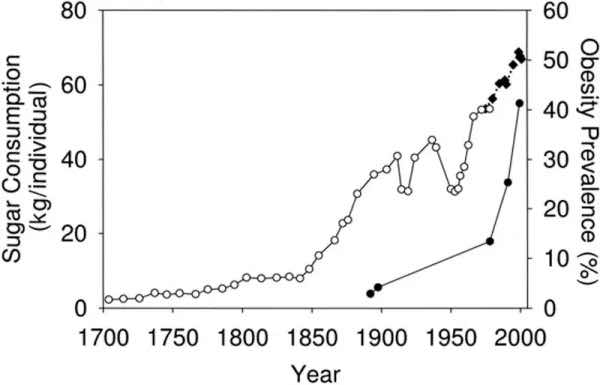
Fatty Liver Disease now affects a staggering 30% of the adult population in most First World countries; and around 50 percent of those who have diabetes, especially if they are also obese.
The phenomenal rise in the consumption of sugar, except during the two World Wars of course exactly parallels the sharp increase in the prevalence of MASLD.
Fruit juices
Fruit juices like OJ are amongst the biggest offenders because of their high fructose content; this sugar is able to get around the regular pathways that the pancreas uses to manage glucose levels, making us insulin-resistant.
This excessive fructose consumption is immediately converted into fat droplets in the liver and in adipose tissue.
But once again unprocessed fruits like eating a whole apple or bunch of grapes does not cause this surge in blood fructose because of all the fibre; that slows the release of food from the stomach.
But there's little profit for the food industry if we eat apples, bananas and oranges; they want us to drink the ultraprocessed fruit juices. Now they can score and see a big surge in the bottom lines of the company audited figures.
Sugars and alcohol too are stored in the Very Low Density Lipoproteins that carry the triglycerides and the "bad cholesterol."
Common sodas
Common soft drinks obviously are very high in sugar, around 30 teaspoons per litre; they are major drivers of fatty liver disease.
This excessive glucose like fructose is also immediately converted in the liver into fatty acids; this promotes inflammation in the organ.
The Heart Association recommends no more than six teaspoons of sugar per day.
Unfortunately scientists are telling us that the sugar substitutes are little better; they also promote weight gain because of their detrimental affect on the microbiome, shifting the balance towards those pathogenic bacteria that makes us fat.
A rock and a hard place
This all places the person who wants to be healthy in an invidious position; the only option is to pull the sweet tooth and get back to drinking water, teas and even small amounts of coffee, no more than three cups per day.
Most but not all natural unprocessed honeys, only readily available from hobbyist beekeepers, have a low GI[2]; they do not cause a blood glucose or fructose spike. In fact they lower fasting sugar tests.
Red and processed meat
With most red meat today coming from animals raised in a feed lot on a diet high in corn, it increases the prevalence of fatty liver disease by 50%[1]; particularly if it has been processed into bacon, Vienna sausages and polony, for example.
No one is quite sure about pasture-fed beef because so few people have access to it.
Saved from fatty liver disease
It's easier to add good foods to our diet than take the bad ones out. More legumes, whole grains and plenty of salads will save us from the ravages of MASLD; it readily progresses to cirrhosis and hepato-cellular carcinoma of the liver.
The Cancer Association in fact recommends a legume and a whole grain at every meal; no one does that but many people do not even achieve it once a month.
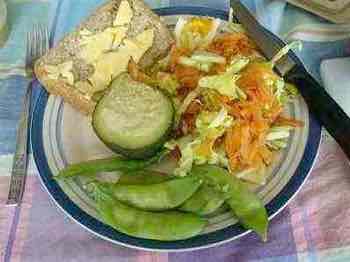 Wholegrain bread and hummus salad
Fava beans are the favourite legume at Our Green Home because of their very high dopamine content; but you won't find them in the grocery store. You have to grow them yourself.
- How to sprout, stake and plant broad beans, also known as favas in Europe.
Limas and common pole beans are perhaps a simpler option; but they are not rich sources of the "happy hormone." Choosing healthier foods is always uphill; the protection that broad beans give against Parkinson's Disease, the fastest growing neurodegenerative condition in the world is an enormous plus.
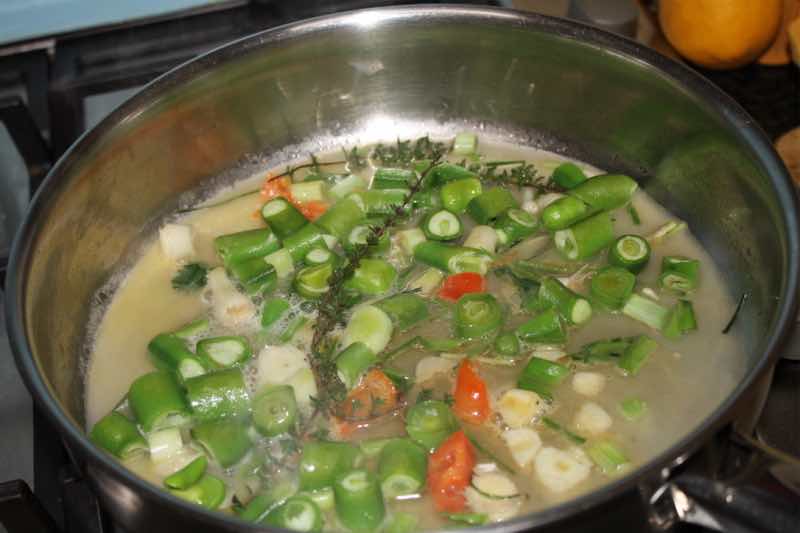 Unskinned broad beans have a very low GI
Nuts and seeds too give strong protection against fatty liver disease.
It's not so radical to make sure the pecan nut bowl never leaves the dining room table; try and crack your own and enjoy at least three every day. That way you cannot readily eat too many.
Pecans incidentally are also an excellent source of vitamin E, nature's anticoagulant; protection against heart attacks and strokes. We should all be eating nuts and seeds daily if we want to enjoy vigorous, joyful old age, not beset by disease. The research is strong[4].
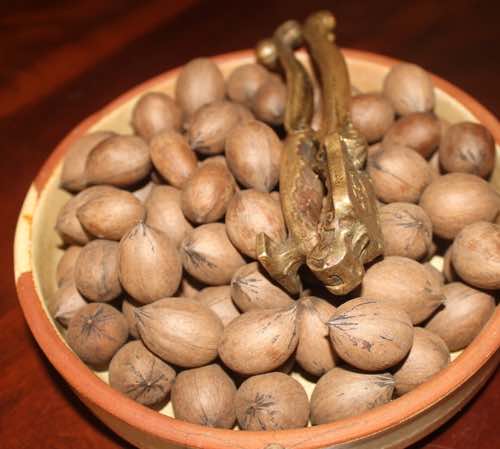 Nuts and seeds give protection against MASLD
Whole grain sourdough bread
Getting away from typical grocery store bread is certainly the most difficult; it's a major driver of fatty liver disease too. Once the fibre, natural wheat oils and the protein in the germ are extracted, flour becomes highly glycaemic.
Baking your own sourdough bread from the best flour you can purchase is the only real way forwards; a bridge too far for the majority.
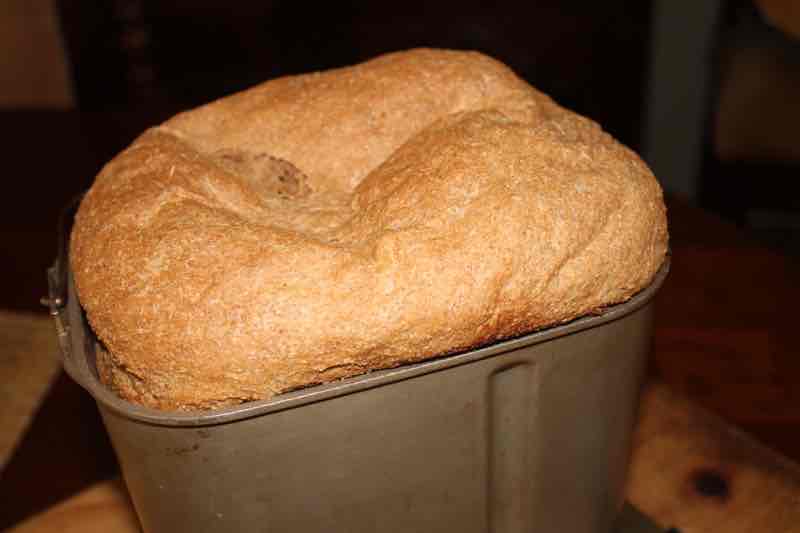 It really does take only five minutes to mix the ingredients
But once you taste bread like this you'll never go back to the commercial loaf; it is not heavy at all but one slice is enough at a meal, perhaps an extra half. You will feel stuffed if you have a second.
The material expressed on this page is gleaned from the nutritional and environmental literature; it is clearly referenced. A plain distinction is made between the author's opinion and that which is scientifically proven. When in doubt consult your health professional.
To suggest a correction or clarification, write to Dr Bernard Preston here. Contact.
Sugars are the drivers of fatty liver disease
Sugars are the drivers of fatty liver disease, not dairy products.
When browsing use right click and "Open Link in New Tab" or you may get a bad gateway signal.
Newsletter
Our newsletter is entitled "create a cyan zone" at your home, preserving both yourself and Mother Earth for future generations; and the family too, of course. We promise not to spam you with daily emails promoting various products. You may get an occasional nudge to buy one of my books.
Here are the back issues.
- Lifestyle and ideal body weight
- What are ultra-processed foods?
- Investing in long-term health
- Diseases from plastic exposure
- Intensive lifestyle management for obesity has limited value
- A world largely devoid of Parkinson's Disease
- The impact of friendly bacteria in the tum on the prevention of cancer
- There's a hole in the bucket
- Everyone is talking about weight loss drugs
- Pull the sweet tooth
- If you suffer from heartburn plant a susu
- Refined maize meal and stunting
- Should agriculture and industry get priority for water and electricity?
- Nature is calling
- Mill your own flour
- Bake your own sourdough bread
- Microplastics from our water
- Alternative types of water storage
- Wear your clothes out
- Comfort foods
- Create a bee-friendly environment
- Go to bed slightly hungry
- Keep bees
- Blue zone folk are religious
- Reduce plastic waste
- Family is important
- What can go in compost?
- Grow broad beans for longevity
- Harvest and store sunshine
- Blue zone exercise
- Harvest and store your rainwater
- Create a cyan zone at your home
Did you find this page interesting? How about forwarding it to a friendly book or food junkie? Better still, a social media tick would help.
- Homepage
- Weight Loss
- Foods That Lower Cholesterol
- Sugars Are the Drivers of Fatty Liver Disease
Address:
56 Groenekloof Rd,
Hilton, KZN
South Africa
Website:
https://www.bernard-preston.com