- Homepage
- Wheat bread
- An electric flour mill for every baker
- Does Flour Go Off
Does flour go off?
Does flour go off? Is the ultra-refining of wheat absolutely necessary and are there other strategies that could be used to prevent the oxidation of the fats?
Does flour go bad is a very pertinent question? Yes, it certainly does.
One hundred percent whole wheat contains a huge number of essential vitamins, minerals and fat; and essential plant nutrients like lignans and betaine. Once the kernel is cracked and air can get to these components, oxidation begins. In short, it starts going rancid and relatively quickly; within days.
In fact in reality in a small way, within hours; the ideal is to mill the flour and immediately bake your bread.

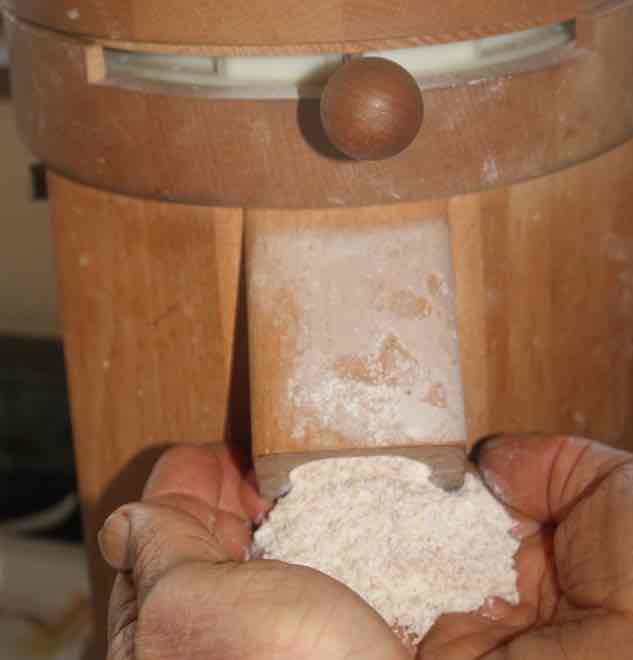
The food manufacturing
industry's solution is simple; remove these substances. So most wheat
foods are either 100 percent extraction which means that all the bran
and wheat germ are discarded; and it is often then also bleached to make it
super white, perfect for the unwitting and unconcerned cook.
Or 60 percent extraction flour is used, meaning that 40% of the goodies have been removed. In practice that means that most of the B vitamins and minerals are lost; interestingly, they go to animal food where they are described as a "wastage product" of the milling industry.
So too the bran is removed; it's the insoluble fibre that gives the stool bulk, making it easy to pass.
Whilst I don't believe in adding extra to our food, the natural bran in one hundred percent whole wheat has been shown in research published in the journal Diabetes Care to greatly reduce metabolic syndrome and insulin resistance; and the lignans gives protection against prostate and breast cancer.
In short even the most common "wholewheat flours," having in reality less than 50% of the vitally important stuff are ultra-processed, dangerous and fattening.
Does flour go off?
Does flour go off? Yes, it certainly does though placing it in the freezer for two weeks gives some protection against the weevils and the oxidizing effect of the air. Then it can be stored in airtight buckets indefinitely.
The material expressed on this page is gleaned from the nutritional and environmental literature; it is clearly referenced. A plain distinction is made between the author's opinion and that which is scientifically proven. When in doubt consult your health professional.
To suggest a correction or clarification, write to Dr Bernard Preston here. Contact.
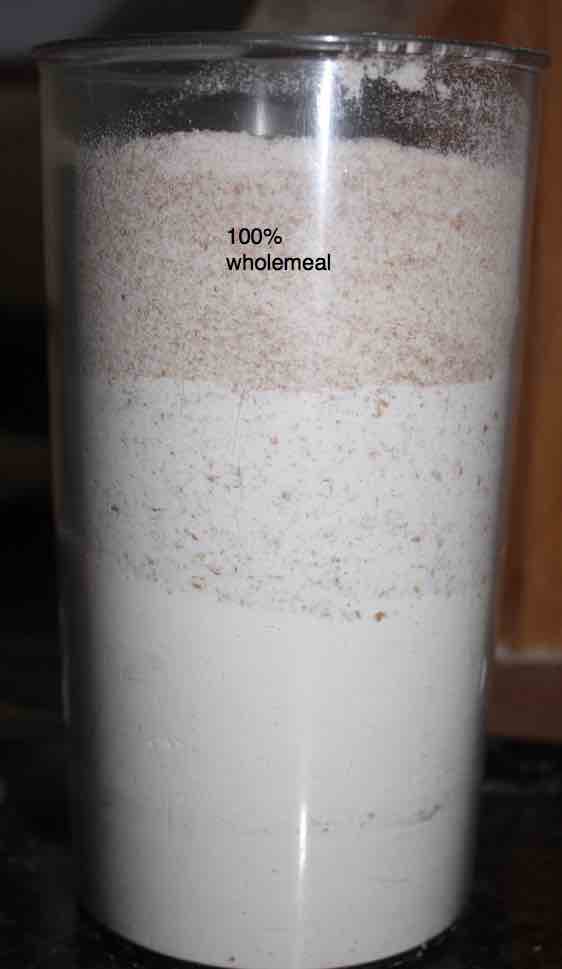
It's the oils in the wheat germ that go rancid; in nature and in our bodies, these fats are protected against the air by an antioxidant called vitamin E; extract it, discard it and you have the answer to the question, does flour go bad? Yes, it certainly does.
The upper part in the
graphic above is 100% meal; the middle section is described as
wholewheat on the bag but as you can see is a very different kettle of
fish. Cake flour is at the bottom.
When these rancid and oxidised oils enter the body, their toxic waste products attack the inner lining known as the "intima" of our blood vessels causing a disease process called atherosclerosis; it progresses to high blood pressure and heart disease.
Therein we sit on the horns of a dilemma; we buy and use one hundred percent wholewheat flour that was milled certainly weeks and perhaps months previously but it's now loaded with the oxidised breakdown products of fats going rancid.
Or we eat refined flour that has had most of the valuable parts removed.
The solution comes in two parts.
- Find a source of recently milled flour and insist on one hundred percent wholewheat. Keep it in the freezer.
- Accept that we are no longer going to use refined, bleached white flour in our cooking, at least not in major proportions.
Neither of these may be palatable to us. Then we have to accept an uncertain future in which hypertension and heart disease rank highly; and the growing incidence of diabetes in our world.
Freezing your wholewheat flour
Freezing your wholewheat flour in an airtight container certainly helps;
the whole oxidative process is slowed. Refined white flour has no
nutrients, other than starch, so there is no point in keep it in the
fridge; there's nothing to go bad and the weevils will show no interest.
Lignans
Lignans
are a phytochemical that have a structure similar to oestrogen; they are
broken down in the bowel to form a compound called enterodiol that
research has proved gives protection against many cancers, including the
breast and prostate. Does flour go bad is one part of the story.
Lignans are found in large amounts in whole grains and seeds. White flour has none, they go as a wastage product to keep animals in fine fettle.
100% whole wheat, sesame and flax seeds have large amounts of lignans.
You'll find the sesame seeds once hulled in the freezer in shops; if not avoid them. Expect to pay a lot more.
Inflammation is another area of great interest to chiropractors and their patients. Research published in the American Journal of Clinical Nutrition, proved that apparently healthy individuals eating a diet low in choline and its breakdown product betaine had 20% more low grade systemic inflammation in their bodies.
This has profound
implications for those patients who find they have multiple
sources of pain in their bodies. Their backs, necks and shoulders all seem to ache; knees
and feet too. This process is affecting our blood vessels and organs as well.
Choline is found in eggs, tofu and 100% wholewheat; spinach, beetroot and Swiss chard too.
Making every effort to minimise this low grade systemic inflammation translates into less back pain, fewer headaches and a reduced level of inflamed blood vessels.
If you're interested read the abstract in AJCN entitled dietary betaine and inflammation[1].
What is betaine is a subject we should all have some understanding of if we have angry and inflamed bodies.
Hormone replacement therapy
It's indisputable now that women for go on to hormone replacement therapy have a much higher incidence of dread disease of the female organs. Interestingly if they enjoy high fibre diets, especially from grains and fruit they have a fifty percent reduced rate of breast cancer, when compared with those who ate the least foods.
Again the dilemma lies in the question does flour go bad? Remove the bran, vitamin E and fatty fraction and the risk of CA rises sharply.
This is particularly true of Combi HRT which contains both oestrogen and progestin; never use it except in extreme circumstances. And make sure you are getting plenty of fibre in your diet.
Wheat grinder
An electric wheat mill is the answer to the question does flour go bad.
Yes healthy flour certainly has a shelf life, unlike the refined product that keeps for ever but gives us nutritionless, tasteless bread; worse, in order to make it edible we have to smother it in processed meats, jams and jellies. That too means a high risk of malignancies and diabetes.
It
will also mill corn. There are so many reasons to choose yellow grain
for your grits; the beta-carotene and zeaxanthin for your eyes for
example. Adult-onset macular degeneration, the commonest cause of
blindness in the elderly is not fun.
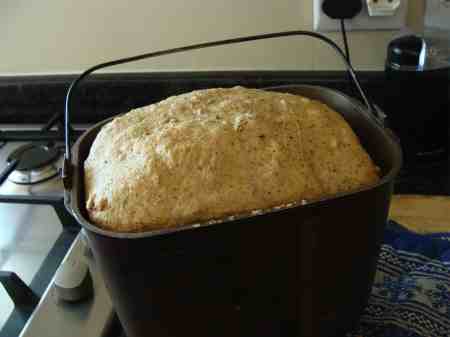
I could go on ad nauseam about the proven benefits of 100% whole wheat on gallstones, obesity and constipation; asthma, diabetes and a host of other diseases too. It's all in the scientific literature. If you are still unconvinced of the value of an electric flour mill and the five minutes you will have to spend baking your own bread every day, then read more at heart stroke diabetes.
Rather than suffer from these maladies, we decided to make the considerable investment in a wheat grinder, to purchase whole wheat grains and daily grind flour that would go bad if kept on the shelf, except that it is immediately used.
That decision meant also a conscious decision to reduce our white flour consumption; my wife tells me that we have used one and half pounds of the refined stuff in three months. I like it in the batter for my fried eggplant and she bakes cakes and scones very occasionally. One doesn't want to become a nutcase but these things are important.
Compare that with 3/4 pound of whole wheat
flour in each loaf of low GI bread that I bake daily. That's 70 pounds
in three months. We purchase four 50kg sacks of the grain directly from the farmer every year.
We bought the grinder
twenty-five years ago; it's definitely paid for itself many times over.
Neither of us take any drugs or have any health issues, in our late
seventies; but that is an anecdote of course, and of no real scientific
value. Still, a life without medication is our dictum.
"It has been estimated that 20% of Medicare beneficiaries have five or more chronic conditions; and fifty percent are taking 5 plus drugs daily."
Antioxidant vitamin E
Does flour go bad and the antioxidant called vitamin E are fundamentally linked.
The antioxidant vitamin E is found in eight different isomers, all of which are important for human wellness.
In this instance it's these properties that are so important in helping prevent flour from going bad.
In the refining process both the germ, including vitamin E and fatty acids and the bran are removed. Isn't it odd that weevils have no interest in refined flour and it has an indefinite shelf life? All the goodness is gone, either sold as animal fodder or turned into expensive bran and softgel capsules; and retailed back to us at great profit.
Choline and spinal health
Choline and chiropractic surprisingly are synergistic subjects; they are both in the business of reducing inflammation in the body. It's a central subject in answering the question does flour go bad.
Choline is now recognised as a B vitamin that your body cannot synthesize and you must have daily in your diet for optimal health. It has many functions but one is the synthesis of an enzyme vitally important for methylation of a very inflammatory breakdown product of protein metabolism called homocysteine. It is central in many illnesses including Alzheimer's and cardiovascular disease.
100% whole wheat is an excellent source of choline but most of it is in the bran and germ; once it's refined it has little value to us. The hogs get the benefit.
The
average Western diet has less than 50% of the required choline; it's
one of the main reasons why there is so much inflammation in our joints,
muscles and organs.
Your chiropractor can reduce the subluxation of your joints, a major cause of degenerative arthritis but it's your responsibility to make sure your homocysteine levels are kept low by consuming foods rich in the B vitamins; there is more information at choline food sources.
Preserving wheat berries
Wheat berries are subject to attack from three different sources; first weevils, secondly moisture and thirdly oxygen. The solution is to freeze them for at least ten days and then seal them in airtight containers.
We have a dedicated freezer into which large buckets of the wheat berries go; they are then removed and can be stored in a cool room for years.
The freezing process with kill any weevil larvae.
Ground wholemeal flour can be kept in the fridge for a maximum of seven days, and in the freezer for a month or two. However, my best advice is to keep the mill on the countertop and use the flour immediately it's ground.
There's little to be gained by refrigerating and freezing; and much to be lost.
This is easy sourdough bread recipe if our favourite, made with 100% freshly ground wholemeal.
It is perhaps cynical but there is a fourth enemy that attacks wholesome wheat and reduces it to a worthless, fattening powder; the commercial miller. I stand behind my earnest belief that every serious baker deeply concerned about wellness should have his or her own grinder; then there is no separation of the germ, bran and endosperm.
Gluten intolerance
Intolerance to the gluten in wheat is of great concern to many; and rightly so.
However the avoidance of whole grain products should also be of concern; it contributes directly to a significantly higher rate of heart disease, cancer and the many conditions associated with constipation.
There is a
solution for the vast majority of gluten sufferers; enjoying bread that
been exposed to a sourdough culture for a prolonged period. That means preparing it yourself; unless you have a very unusual and unique baker
around the corner.
Read more on this subject at meaning of gluten.
I reiterate it takes me only five minutes daily to prepare our
sourdough loaf using our own freshly ground 100% wholemeal "real flour;"
at a fraction of the cost if you can get the wheat directly from the
farmer. In fact it costs about R5 loaf, a third of a dollar if you have your own mill and bread machine.
If you suffer from inflammatory bowel disease then the dough has to prove for 24 hours; prepare it today for tomorrow's loaf. You may need to change to the one of the heritage varieties like spelt or einkorn.
Does flour go off?
Does flour go off? And if so why does that happen? I hope that you are beginning to grasp the complexity of wheat and how important it has been in the lives of humans and other animals for all of recorded time.
I find it interesting that our chickens will choose wheat over corn every time; perhaps because of the betaine.
When browsing use right click and "Open Link in New Tab" or you may get a bad gateway signal.
Newsletter
Our newsletter is entitled "create a cyan zone" at your home, preserving both yourself and Mother Earth for future generations; and the family too, of course. We promise not to spam you with daily emails promoting various products. You may get an occasional nudge to buy one of my books.
Here are the back issues.
- Lifestyle and ideal body weight
- What are ultra-processed foods?
- Investing in long-term health
- Diseases from plastic exposure
- Intensive lifestyle management for obesity has limited value
- A world largely devoid of Parkinson's Disease
- The impact of friendly bacteria in the tum on the prevention of cancer
- There's a hole in the bucket
- Everyone is talking about weight loss drugs
- Pull the sweet tooth
- If you suffer from heartburn plant a susu
- Refined maize meal and stunting
- Should agriculture and industry get priority for water and electricity?
- Nature is calling
- Mill your own flour
- Bake your own sourdough bread
- Microplastics from our water
- Alternative types of water storage
- Wear your clothes out
- Comfort foods
- Create a bee-friendly environment
- Go to bed slightly hungry
- Keep bees
- Blue zone folk are religious
- Reduce plastic waste
- Family is important
- What can go in compost?
- Grow broad beans for longevity
- Harvest and store sunshine
- Blue zone exercise
- Harvest and store your rainwater
- Create a cyan zone at your home
Did you find this page interesting? How about forwarding it to a friendly book or food junkie? Better still, a social media tick would help.
- Homepage
- Wheat bread
- An electric flour mill for every baker
- Does Flour Go Off
Address:
56 Groenekloof Rd,
Hilton, KZN
South Africa
Website:
https://www.bernard-preston.com