- Homepage
- Coloured foods for better health
- Avocados and olives
- Food for the brain
- Demyelinating Diseases: What Is Oleic Acid
Demyelinating diseases: What is oleic acid?
Demyelinating diseases: What is oleic acid? It's mainly in the fruit fats especially olives and avocados. It has benefits for folk with demyelinating diseases.
What is oleic acid but a monounsaturated fat. It is found in particularly large amounts in olive oil; hence the similarity of their names. It has been associated for centuries with the better health experienced by those folk living in winter rainfall Mediterranean climates where the fruit flourishes.
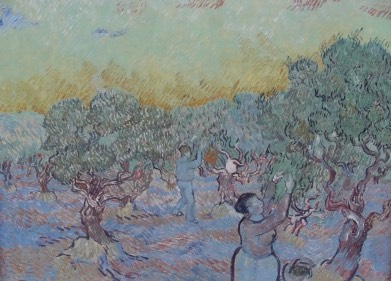
I hope you recognise the olive orchard below.
The artist painted many such scenes; this one is to be seen in the
Kroller-Muller Museum in Holland It is well worth a visit.
The particular interest of chiropractors in oleic acid is that it is the primary substance in the myelin sheath that enables conduction of impulses by nerves.
It is also the most abundant fat in the brain.

Demyelinating diseases like MS attack the fatty sheath that surrounds nerves, preventing conduction and causing paralysis among other signs.
You have probably heard of omega 3 and 6 fatty acids; they are
essential oils that we cannot live without. They are both
polyunsaturated; that means they have more than one double bond.
Oleic acid on the other hand is an omega-9 fatty acid. It can be manufactured by the body from ω3 and 6 if we have sufficient of them; it is thus not "essential." It is monounsaturated.
It has only one double-bond at the 9th carbon atom in the chain.
The numbers 3, 6 and 9 refer to the position of a double-bond in the molecule.
Whilst the omega 6 fatty acids are "essential", we cannot live without them, they are in many instances pro-inflammatory. Thus they should be consumed, but in moderation. Using large amounts of sunflower oil for example, will promote aching joints and muscles; polymyalgia and inflamed blood vessels.
Using no sunflower oil may be equally problematic if it causes a deficiency of these essential fatty acids; all things in moderation.
Thus large quantities of olive oil, and smaller amounts of sunflower for example is what is recommended.
The material expressed on this page is gleaned from the nutritional and environmental literature; it is clearly referenced. A plain distinction is made between the author's opinion and that which is scientifically proven. When in doubt consult your health professional.
To suggest a correction or clarification, write to Dr Bernard Preston here. Contact.
What is oleic acid?
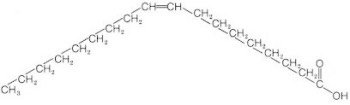
What is oleic acid but the main constituent of olive oil. Oddly it is not an "essential" fatty acid but it is unquestionably the healthiest fat in our diets, omega-3 fats perhaps excepted.
It is also found in large amounts in avocados; together with the olive they make up the "fruit" sources of fats.
Seeds and meat are the other sources of fat but they are less healthy; but still required in small quantities. Through careful choice of foods vegetarians can get around this.
It's also known as an omega-9 unsaturated fatty acid; count the
number of carbon atoms from the left where the double bond is located and then you will understand why.
This is probably as clear as mud unless you know some chemistry.
In short, we should enjoy
- small amounts of seed oils. They include the essential fatty acids; cold pressed if you can find them.
- small amounts of meat oils are optional. They include much saturated-fat.
- large amounts of fruit-oils.
- large amounts of fish oil, especially for the omega-3.
- palm and coconut oils are generally considered healthy but do contain saturated fat.
- canola, rapeseed oil remains the most controversial, not because of the healthy amount of omega-3 but it contains but other toxic compounds. The jury isn't out on the subject with conflicting scientific evidence.
Large amounts of oils rich in oleic acid have been clearly shown to
raise the healthy HDL fats whilst lowering the unfriendly LDLs that are
associated with atherosclerosis.
Peripheral neuralgias are a common affliction in older folk; numbness and tingling in the feet and lower legs are the most common symptoms. It may feel that you have gloves or stockings on. It can also cause motor signs such as weakness in one or many muscles.
Diabetes for example has a predilection for the quadriceps in the thigh by reducing the blood flow to the nerve supplying the muscle.
Many of these peripheral neuralgias are poorly understood; some are autoimmune disease in which the body defense system attacks the myelin sheath of our own nerves.
It is hypothesized that trans fatty acids used in the
myelin sheath may be part of the problem; normally speaking our bodies
use only the cis-isomer.
It can be a sign of lumbar spinal-stenosis.
Oleic acid is a healthy fat
In short oleic acid is a healthy fat found abundantly in meat, seeds and nuts; and fruit oils.
Monounsaturated
oils like oleic acid in the diet have been associated with lower LDL
cholesterol, and higher healthy HDL; that means better health.
Generally it is found not as free oleic acid, but as the triglyceride of the fat.
The more refined the greater amount of free oleic acid; that's not desirable. Extra-virgin olive oil contains less than 1%.
However, too much fat in the diet is not healthy and is associated with many diseases; that would include the oleic acid in olive oil.
Olive oil only goes rancid very slowly, releasing trans forms; that is one of the reasons why it is so healthy. Having opened a bottle, do finish it within a month or so, however. And don't keep it more than a year.
When the olives start to ripen in autumn you will find the previous season's oil being sold at a lower price; do not hoard it. Enjoy it and finish the bottles within a month or two. Every extra tablespoon you consume per day will reduce the chance of heart disease by 10%[3]; that's massive.
In this work, we attempted to gain insight into the cellular and molecular mechanisms by which oleic acid promotes neuronal differentiation in order to understand its role in brain development[3].
Help
This website concerns itself with issues such as those surrounding the fats in our diets, because patients are daily consulting us with nerve type symptoms; what is oleic acid is a question that faces every patient in pain.
Some of them are directly related to dietary issues and are not pinched nerves at all; having an understanding of what is oleic acid may help some of your aching joint problems. It's certainly heart-friendly in any case.
Olive garden salad dressing
Olive garden nutrition sets out in a layman's terms the mystery of
the different oils. What's the difference between mono and
polyunsaturates? What are the dangers of going on an extremely low fat
diet? What is oleic acid?
The virtues of olive garden nutrition in general, and the specifics of what is oleic acid is not rocket science; the information has been around for decades.
Of course you don't have to understand how a car works to drive and enjoy it; if you have no desire to grapple with these issues, then just use more olive garden salad dressing.
If you're a baker, make a olive bread recipe.
Avocado fat
Avocado fat is a wonder. Weight watchers used to ban it completely, but have changed their minds since grasping the importance of what is oleic acid. In any case, most of us are obese not because of too much oil in our diet but from refined carbohydrate. If you regularly eat white rice, commercial bread and cookies, and drink colas you will be too large.
Try to enjoy at least two avocados per week in season. For the rest of the year you need olive oil to satisfy the what is oleic acid equation.
Olives and avocado fat is where oleic acid is to be found in abundance; they are both fruit rather than seed or nut oils.
Read more about it at health benefits of avocado fats.
Fat is vitally important in the diet and oddly not the primary cause of obesity; it's refined starches like crackers and chocolate cake that do that. It is a hugely complex subject and you can get a different slant from this hugely important flax seed nutrition information. Really we should all grind them and add a tablespoon to our cereal every morning; fresh is the word.
Demyelinating diseases: What is oleic acid?
Demyelinating diseases: What is oleic acid? It's one of the so-important monounsaturated fats.
Going on a very low fat diet increases the risk of these serious diseases.
When browsing use right click and "Open Link in New Tab" or you may get a bad gateway signal.
Newsletter
Our newsletter is entitled "create a cyan zone" at your home, preserving both yourself and Mother Earth for future generations; and the family too, of course. We promise not to spam you with daily emails promoting various products. You may get an occasional nudge to buy one of my books.
Here are the back issues.
- Lifestyle and ideal body weight
- What are ultra-processed foods?
- Investing in long-term health
- Diseases from plastic exposure
- Intensive lifestyle management for obesity has limited value
- A world largely devoid of Parkinson's Disease
- The impact of friendly bacteria in the tum on the prevention of cancer
- There's a hole in the bucket
- Everyone is talking about weight loss drugs
- Pull the sweet tooth
- If you suffer from heartburn plant a susu
- Refined maize meal and stunting
- Should agriculture and industry get priority for water and electricity?
- Nature is calling
- Mill your own flour
- Bake your own sourdough bread
- Microplastics from our water
- Alternative types of water storage
- Wear your clothes out
- Comfort foods
- Create a bee-friendly environment
- Go to bed slightly hungry
- Keep bees
- Blue zone folk are religious
- Reduce plastic waste
- Family is important
- What can go in compost?
- Grow broad beans for longevity
- Harvest and store sunshine
- Blue zone exercise
- Harvest and store your rainwater
- Create a cyan zone at your home
Did you find this page interesting? How about forwarding it to a friendly book or food junkie? Better still, a social media tick would help.
- Homepage
- Coloured foods for better health
- Avocados and olives
- Food for the brain
- Demyelinating Diseases: What Is Oleic Acid
Address:
56 Groenekloof Rd,
Hilton, KZN
South Africa
Website:
https://www.bernard-preston.com